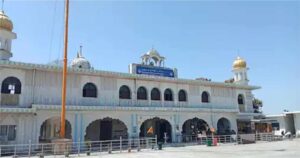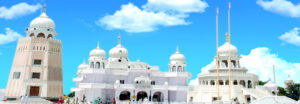

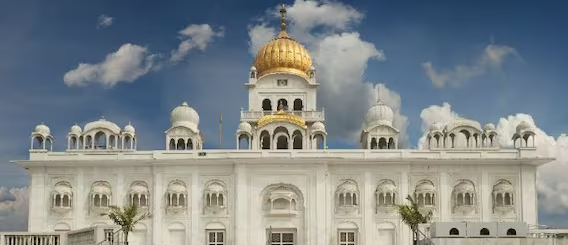
There are countless places to visit in New Delhi, but only a handful leave an impression that lasts long after the journey ends. Gurdwara Bangla Sahib is one of them. Its golden dome attracts attention from a distance, yet what stays with most visitors is not the architecture. It is the atmosphere. The noise of central Delhi gradually fades, conversations become quieter, and complete strangers are welcomed with the same warmth as lifelong devotees. In a city known for its energy and constant movement, Bangla Sahib offers something many people do not expect to find: a genuine sense of peace.
Dedicated to Guru Har Krishan Ji, the eighth Sikh Guru, Gurdwara Bangla Sahib is one of the most important Sikh shrines in India. Every day, people from different faiths, cultures, and countries pass through its gates. Some arrive to pray, others to volunteer, and many simply wish to understand why this place holds such deep meaning for millions of Sikhs. Regardless of the reason for visiting, everyone encounters the same values of humility, equality, and selfless service that have defined the shrine for more than three centuries.
Unlike historic monuments that preserve memories of kings or empires, Bangla Sahib continues to serve its original purpose as a living place of worship. Before sunrise, devotional hymns begin inside the prayer hall. Volunteers prepare meals that will be shared with thousands of visitors, while worshippers gather quietly beside the sacred sarovar. Nothing here feels staged for tourists. Daily life follows traditions that have been passed from one generation to the next, making the gurdwara as relevant today as it was in the seventeenth century.
The remarkable story behind Gurdwara Bangla Sahib
The history of Bangla Sahib begins with Raja Jai Singh I of Amber, one of the most respected Rajput rulers of his time. His elegant residence in Delhi, known as Jai Singh’s Bangla, stood outside the crowded streets of Shahjahanabad and often welcomed important guests. At first, it was simply a noble residence connected with the Mughal court. Few could have imagined that it would one day become one of Sikhism’s most revered pilgrimage sites.
In 1664, Guru Har Krishan Ji arrived in Delhi at Raja Jai Singh’s invitation. Around the same period, the city was struggling with severe outbreaks of smallpox and cholera, creating fear across many neighbourhoods. Although the Guru was only eight years old, Sikh historical traditions describe him comforting the sick, encouraging grieving families, and offering hope to people facing unimaginable hardship. Rather than remaining inside the safety of the royal residence, he chose to spend his time among those who needed help the most. That decision became one of the defining moments in Sikh history and continues to shape the identity of Bangla Sahib.
While caring for the people of Delhi, Guru Har Krishan Ji contracted smallpox himself. His earthly life ended later that year, but the place where he stayed was never viewed in the same way again. The bungalow became a sacred site because it represented compassion in action rather than power or privilege. More than a century later, in 1783, Sikh commander Sardar Baghel Singh established Bangla Sahib as one of Delhi’s historic Sikh shrines, ensuring that Guru Har Krishan Ji’s legacy would be preserved for future generations. Since then, the complex has grown carefully over time while maintaining its historical and spiritual identity.
Today, the shrine is managed by the Delhi Sikh Gurdwara Management Committee (DSGMC). Along with organising daily religious services, the committee oversees educational initiatives, charitable activities, heritage conservation, and facilities that welcome millions of visitors each year. Modern additions have improved the visitor experience without changing the values that have always defined Bangla Sahib.
Bangla Sahib at a glance
| Quick fact | Information |
| Dedicated to | Guru Har Krishan Ji |
| Original site | Raja Jai Singh’s Bangla |
| Historic visit | 1664 |
| Established as a Sikh shrine | 1783 |
| Managed by | Delhi Sikh Gurdwara Management Committee (DSGMC |
Why Bangla Sahib continues to inspire millions
Many religious sites are admired for their architecture, while others are remembered because of important historical events. Bangla Sahib is different because its greatest significance lies in the values it continues to practise every day. Guru Har Krishan Ji’s decision to serve people during a deadly epidemic remains one of the most powerful examples of compassion in Sikh history. His actions demonstrated that true leadership is measured not by authority or wealth, but by a willingness to help others without expecting anything in return.
Those principles are easy to recognise throughout the gurdwara. Everyone enters through the same gates, removes their shoes, covers their head, and shares the same space regardless of religion, nationality, profession, or social background. Visitors often notice that there is no sense of separation between pilgrims and tourists. Instead, there is a quiet understanding that every person deserves equal respect. This atmosphere of openness leaves a lasting impression, especially on first-time visitors who may know little about Sikh traditions before arriving.
Many people come expecting to spend a short time exploring the complex but end up staying much longer than planned. Some listen to Gurbani inside the prayer hall, while others sit beside the sarovar or observe volunteers carrying out seva. Without announcing itself, Bangla Sahib gently encourages visitors to slow down, reflect, and appreciate the simple acts of kindness taking place around them. That experience often becomes the most memorable part of the visit.
What makes Bangla Sahib spiritually unique?
- It commemorates Guru Har Krishan Ji’s compassion during the epidemic of 1664.
- Visitors of every faith are welcomed with equal respect.
- Prayer, seva, and community service continue throughout the day.
- It remains an active place of worship instead of a preserved historical monument.
- Sikh values are experienced through everyday actions rather than displays or exhibitions.
Architecture shaped by faith rather than grandeur
The golden dome of Bangla Sahib has become one of New Delhi’s most recognisable landmarks, but its architecture was never designed simply to impress visitors. Every section of the complex reflects the practical needs of worship, community life, and service. As the number of pilgrims increased over the centuries, the shrine expanded thoughtfully, ensuring that new additions blended naturally with the original character of the site instead of overwhelming it.
White marble dominates the complex, creating a bright and welcoming environment that feels noticeably different from the busy streets outside. Broad walkways connect the prayer hall, the sarovar, and community facilities, allowing thousands of visitors to move comfortably throughout the day. Landscaped gardens soften the surroundings, while the open layout helps maintain a sense of calm even during major Sikh festivals. Rather than displaying royal grandeur, the architecture quietly reinforces the Sikh belief that places of worship should remain open, accessible, and welcoming to everyone.
Architectural highlights
- Gold-plated central dome overlooking the shrine.
- Elegant white-marble courtyards and pathways.
- Traditional Sikh arches and decorative stonework.
- Landscaped gardens that create a peaceful setting.
- Spacious gathering areas designed for large congregations.
- Multiple entrances symbolising equality and openness.
Inside the Darbar Sahib
The spiritual heart of Gurdwara Bangla Sahib is the Darbar Sahib, where the Guru Granth Sahib, the holy scripture and eternal Guru of Sikhism, is respectfully placed. Throughout the day, the hall resonates with Gurbani Kirtan, devotional hymns that create an atmosphere of peace and reflection. Unlike many famous religious sites where visitors spend most of their time taking photographs, people here often choose to sit quietly for a while, allowing the music and surroundings to become part of their experience.
Visitors from every faith are welcome inside the Darbar Sahib, provided they follow a few simple customs that reflect respect for the sacred space. These traditions are not intended to create barriers but to ensure that everyone enters with the same sense of humility.
Visitor etiquette inside the Darbar Sahib
- Cover your head before entering.
- Remove your shoes and leave them at the free shoe counter.
- Wash your feet before stepping onto the marble pathways.
- Wear modest clothing that covers the shoulders and knees.
- Keep mobile phones on silent.
- Avoid loud conversations and respect ongoing prayers.
- Do not photograph worshippers without their permission.
For first-time visitors, these customs quickly become part of the experience. Within a few minutes, it is easy to understand why the prayer hall feels calm despite welcoming thousands of people every day.
The sacred sarovar and its enduring significance
Bordering the main shrine is the sarovar, the sacred water tank that has become one of Bangla Sahib’s defining features. Its still waters mirror the golden dome from dawn until late evening, creating one of the most recognisable views in New Delhi. While many visitors stop here for photographs, devotees see the sarovar as a reminder of Guru Har Krishan Ji’s compassion during the epidemic of 1664.
According to Sikh tradition, many people respectfully collect a small quantity of its water, known as Amrit Jal, as an expression of faith and remembrance. The emphasis is not on the water itself but on the values associated with the Guru’s life: humility, hope, and service to others.
Spending a few quiet moments beside the sarovar often becomes one of the most memorable parts of a visit. The reflection of the shrine, the sound of Gurbani drifting across the complex, and the steady movement of worshippers create an atmosphere that encourages reflection rather than haste.
Why the sarovar remains special
- Closely associated with Guru Har Krishan Ji’s legacy.
- Home to the sacred Amrit Jal respected by devotees.
- Provides a peaceful space for reflection and prayer.
- Offers one of Delhi’s most iconic spiritual views.
Langar: A tradition that welcomes everyone
Among the most remarkable experiences at Bangla Sahib is the langar, the community kitchen that serves free vegetarian meals every day. Introduced by Guru Nanak Dev Ji and continued by every Sikh Guru, the langar reflects the belief that no one should go hungry and that everyone should be treated equally.
Visitors sit together on the floor, sharing the same simple meal regardless of religion, nationality, profession, or financial background. This tradition quietly removes social distinctions and reminds everyone that dignity begins with equality.
Behind every meal is the work of hundreds of volunteers. Some prepare vegetables, others cook, clean, serve food, or wash utensils. Their contribution is known as seva, or selfless service, one of the most important principles of Sikhism. Many visitors choose to volunteer for a short time, discovering that helping others becomes as meaningful as sightseeing itself.
What makes the langar unique?
- Free vegetarian meals served every day.
- Open to everyone without discrimination.
- Prepared and served largely by volunteers.
- A living example of equality and community service.
- One of the most meaningful experiences for first-time visitors.
Timings, entry fee & visitor information
Planning ahead can help you enjoy a more comfortable visit, especially during weekends and major Sikh festivals.
| Visitor information | Details |
| Entry fee | Free |
| Opening hours | Open 24 hours |
| Langar | Free for all visitors |
| Head covering | Mandatory |
| Footwear | Must be removed |
| Photography | Allowed outdoors; avoid disturbing worshippers |
While the gurdwara remains open throughout the day and night, the atmosphere changes with the time of day. Early mornings are quieter and ideal for peaceful reflection, while evenings offer beautiful views of the illuminated golden dome reflected in the sarovar.
Best time to visit
Although Bangla Sahib welcomes visitors throughout the year, the overall experience can vary depending on the season and time of day.
Early mornings are ideal for those seeking a quieter atmosphere before the city becomes busy. Evening visits are equally rewarding, as the illuminated dome and marble courtyards create a memorable setting after sunset.
The cooler months from October to March are generally the most comfortable for exploring Delhi. During important Sikh festivals such as Guru Nanak Gurpurab and Baisakhi, the gurdwara becomes especially vibrant, although visitors should expect larger crowds.
How to reach Gurdwara Bangla Sahib
Located in central New Delhi, Bangla Sahib is easily accessible by public transport and private vehicles.
- Metro: Patel Chowk (Yellow Line) and Shivaji Stadium (Airport Express Line) are the nearest stations.
- By road: Taxis, app-based cabs, and auto-rickshaws are readily available throughout Delhi.
- By train: New Delhi Railway Station is only a short drive away.
- By air: Indira Gandhi International Airport is around 15 kilometres from the shrine.
Its central location also makes it easy to combine with other attractions during the same day.
Nearby attractions worth exploring
If time allows, several important landmarks are located within a short distance of Bangla Sahib.
- Connaught Place – One of Delhi’s best-known shopping and dining districts.
- India Gate – A historic war memorial surrounded by landscaped gardens.
- Jantar Mantar – An eighteenth-century astronomical observatory.
- Gurudwara Rakab Ganj Sahib – Another important Sikh shrine associated with Guru Tegh Bahadur Ji.
- Rashtrapati Bhavan – The official residence of the President of India, viewed from designated public areas.
Helpful tips for first-time visitors
A little preparation can make your visit more comfortable and respectful.
- Carry a scarf if you do not already wear a head covering.
- Visit early in the morning for a quieter experience.
- Drink water regularly during Delhi’s summer months.
- Participate in the langar respectfully if you wish.
- Follow instructions from volunteers inside the complex.
- Help keep the premises clean by using the designated waste bins.
More than a monument, a living tradition
Many famous landmarks are remembered because they preserve history. Gurdwara Bangla Sahib is remembered because it continues to live that history every single day. The values demonstrated by Guru Har Krishan Ji more than three centuries ago are still visible in the volunteers serving meals, the worshippers gathering for prayer, and the quiet welcome extended to every visitor who enters the complex.
People often arrive to see a beautiful gurdwara and leave with a deeper appreciation of Sikhism’s emphasis on compassion, equality, and service. That is what makes Bangla Sahib more than an architectural landmark. It remains a place where faith is expressed through everyday actions, reminding visitors that kindness can become a lasting legacy.
Frequently asked questions
Who was Guru Har Krishan Ji, and why is Bangla Sahib dedicated to him?
Guru Har Krishan Ji was the eighth Sikh Guru. Bangla Sahib commemorates his stay in Delhi during 1664 and honours his compassionate service to people affected by an epidemic.
Is there an entry fee to visit Gurdwara Bangla Sahib?
No. Entry to the gurdwara and the langar is completely free for everyone.
Can people from other religions visit Bangla Sahib?
Yes. Visitors of every faith and nationality are welcome, provided they follow the gurdwara’s customs, including covering their head and removing their shoes.
What is the best time to visit Gurdwara Bangla Sahib?
Early mornings offer a peaceful atmosphere, while evenings are popular for the illuminated views of the golden dome and sarovar. The months from October to March are generally the most comfortable for sightseeing.
Official and trusted sources
- Delhi Sikh Gurdwara Management Committee (DSGMC)
- Incredible India
- Delhi Tourism
- Sikh historical references and published literature on Guru Har Krishan Ji
Disclaimer
Timings, visitor facilities, photography rules, and festival schedules may change over time. Always check the official website or contact the gurdwara before planning your visit, especially during major religious events.