
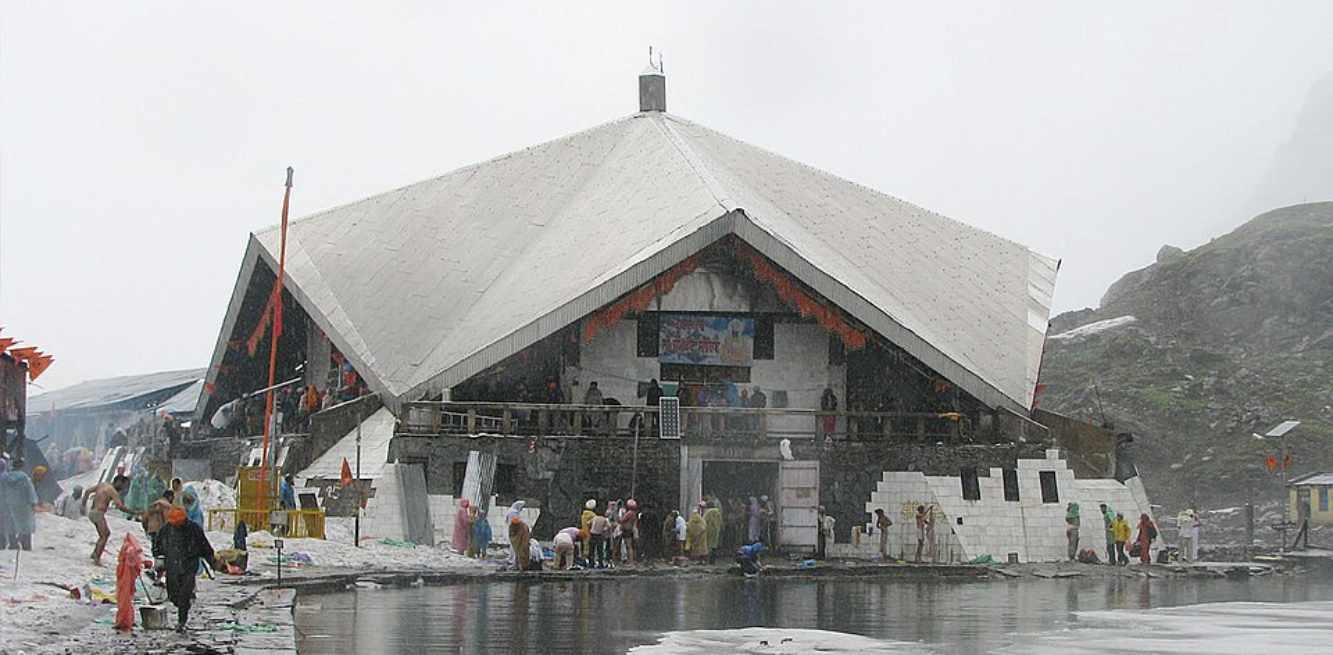
Gurdwara Hemkund Sahib, Uttarakhand, is one of India’s most distinctive Sikh pilgrimage sites, situated beside Hemkund Lake in Chamoli district. At about 4,329 metres above sea level, the shrine stands among the high peaks of the Garhwal Himalayas and remains inaccessible during winter because of heavy snowfall. The final journey is particularly distinctive because pilgrims must trek from Ghangaria to reach the Gurdwara.
The shrine is associated with Guru Gobind Singh, the tenth Sikh Guru, through the tradition surrounding Hemkunt Parvat. The present pilgrimage centre developed much later, creating a history that connects Sikh tradition with the efforts of devotees who established access to this remote Himalayan location.
Gurdwara Hemkund Sahib’s spiritual significance
The spiritual importance of Hemkund Sahib comes from the tradition concerning Guru Gobind Singh and Hemkunt Parvat. In Bachitra Natak, Guru Gobind Singh described a place called Hemkunt Parvat, associated with seven peaks and meditation before his human birth.
The location connected with this tradition was identified much later. Sant Sohan Singh surveyed the area and identified the site in 1934, and with the financial assistance and encouragement of Bhai Vir Singh, a modest shrine was constructed there in 1936.
This gives Hemkund Sahib two important historical layers: its spiritual association with Guru Gobind Singh and the much later development of the physical pilgrimage centre.
Hemkund Sahib at a glance
| Detail | Information |
|---|---|
| Location | Chamoli district, Uttarakhand |
| Elevation | About 4,329 metres |
| Lake | Hemkund Lake |
| Roadhead | Govindghat |
| Main base | Ghangaria |
| Final trek | About 5 km |
| Associated Guru | Guru Gobind Singh |
| Nearby temple | Lakshman Temple |
| Access | Seasonal |
Uttarakhand Tourism gives the route from Govindghat to Ghangaria as about 14 kilometres, followed by approximately 5 kilometres from Ghangaria to Hemkund Sahib.
The route from Govindghat to Ghangaria
Govindghat is the principal road-access point for the pilgrimage. From there, pilgrims travel toward Ghangaria, which serves as the main base for the final journey to Hemkund Sahib and is also used by visitors travelling toward the Valley of Flowers.
Pilgrims generally stay in Ghangaria before beginning the final climb. At around 3,050 metres, it marks an important transition between the lower approach and the steeper high-altitude route.
The final section is only about five kilometres, but the climb is demanding because of its steep sections and altitude. Uttarakhand Tourism specifically describes steep climbs on the route.
What pilgrims should prepare for
Hemkund Sahib is a high-altitude pilgrimage rather than an ordinary sightseeing destination. Cold conditions, rain, uneven terrain and the elevation can make the ascent physically demanding.
Pilgrims should consider:
- Checking the latest Yatra and route status.
- Confirming weather conditions before starting.
- Carrying warm and rain-resistant clothing.
- Wearing sturdy footwear.
- Keeping essential medicines accessible.
- Taking regular breaks during the ascent.
- Allowing sufficient time for the return.
- Following local instructions.
- Avoiding litter along the route.
A steady pace is more useful than trying to complete the climb quickly.
Hemkund Lake and the Himalayan setting
Hemkund Lake is central to the character of the shrine. The Gurdwara stands beside the lake, surrounded by high Himalayan peaks, while Himganga originates from the lake. The combination of sacred site, lake and mountains gives Hemkund Sahib a setting unlike most major Sikh shrines in India.
The landscape also determines the pilgrimage season. Heavy snow covers the upper region during winter, and the shrine reopens when conditions permit the annual Yatra.
A Lakshman Temple is situated close to the Gurdwara. Local tradition associates the temple with Lakshman, the younger brother of Lord Rama, adding another religious dimension to the landscape around Hemkund Lake.
How the modern pilgrimage developed
The modern pilgrimage developed gradually after the site was identified in the 1930s. Establishing a shrine at such altitude was only the beginning because pilgrims also needed places of worship and support along the route.
The history of Hemkund Sahib records the early shrine as a modest structure, while later development created the wider pilgrimage infrastructure needed to bring devotees into this difficult Himalayan setting. The supporting route is therefore an important part of the shrine’s modern history rather than merely a means of reaching it.
Seva along the Hemkund Sahib route
Seva, or selfless service, has a particularly practical meaning on this pilgrimage. Snow and harsh winter conditions can damage the mountain route, requiring work before the next pilgrimage season.
Uttarakhand Tourism notes that pilgrims have also helped repair sections of the trail damaged during winter. This connects the idea of service with the physical needs of the pilgrimage, where maintaining the route can directly help other devotees.
Hemkund Sahib and the Valley of Flowers
Ghangaria provides access to two very different destinations. Hemkund Sahib is a Sikh pilgrimage site, while the Valley of Flowers is a protected Himalayan landscape and UNESCO World Heritage Site.
The two can be included in the same broader journey, but their purposes are different. The Valley of Flowers is known for its alpine flora, with more than 600 recorded flower species, while Hemkund Sahib is centred on Sikh faith and pilgrimage.
Best time to visit Hemkund Sahib
The best time to visit Hemkund Sahib is during the annual pilgrimage season after the upper route has reopened following winter. The shrine remains inaccessible during the heavy-snow period.
For 2026, the sacred portals of Gurdwara Sri Hemkund Sahib were scheduled to open on May 23. The first batch of pilgrims was scheduled to depart from Rishikesh on May 20 under the leadership of the Panj Pyare.
| Period | Conditions |
|---|---|
| Winter | Heavy snow and closed upper route |
| Early season | Cold conditions and reopening |
| Main season | Annual pilgrimage period |
| Monsoon | Wetter trails and changing weather |
| Late season | Increasing cold before closure |
The 2026 dates apply specifically to the 2026 Yatra. Future pilgrims should verify the latest opening announcement before travelling.
How to reach Hemkund Sahib
The pilgrimage combines road travel and trekking.
| Stage | Route |
|---|---|
| Road journey | Rishikesh or Haridwar to Govindghat |
| First trek | Govindghat to Ghangaria |
| Final ascent | Ghangaria to Hemkund Sahib |
| Return | Hemkund Sahib to Ghangaria |
Rishikesh is the commonly used railhead, while Jolly Grant Airport near Dehradun is the nearest airport listed by Uttarakhand Tourism. Govindghat is connected by road with important destinations in Uttarakhand.
Travel plans should remain flexible because mountain roads and trekking routes can be affected by rainfall, landslides, snowfall and other local conditions.
What makes Hemkund Sahib different from other Gurdwaras?
Many famous Gurdwaras in India are located within cities, historic settlements or established Sikh centres. Hemkund Sahib has a different character because reaching the shrine requires a high-altitude mountain journey.
Its significance comes from the tradition associated with Guru Gobind Singh, the later identification of the site and the generations of devotees who developed access through challenging terrain. The mountains determine when pilgrims can visit, how they travel and how they prepare. The result is a pilgrimage in which the spiritual destination and the Himalayan journey remain closely connected.
Planning your Hemkund Sahib pilgrimage
A pilgrimage to Hemkund Sahib requires more preparation than a conventional visit to a religious site. The high altitude, seasonal access and steep final ascent make it important to check the latest Yatra arrangements, weather and route conditions before travelling.
Ghangaria is an important part of the journey because it gives pilgrims a place to rest before the final climb. Once the ascent begins, the landscape itself becomes part of the experience, with the mountain trail gradually leading toward Hemkund Lake and the Gurdwara.
FAQ’s
Where is Gurdwara Hemkund Sahib located?
Gurdwara Hemkund Sahib is in Chamoli district of Uttarakhand, beside Hemkund Lake at approximately 4,329 metres above sea level.
Which Sikh Guru is associated with Hemkund Sahib?
Hemkund Sahib is associated with Guru Gobind Singh, the tenth Sikh Guru, through the tradition concerning Hemkunt Parvat.
How far is Hemkund Sahib from Ghangaria?
The final trek from Ghangaria to Hemkund Sahib is approximately 5 kilometres and includes steep sections.
What is the best time to visit Hemkund Sahib?
The best time is during the annual pilgrimage season after the upper route reopens following winter snowfall.
Can Hemkund Sahib and the Valley of Flowers be visited together?
Yes. Ghangaria serves as the common base for both destinations, allowing visitors to include them in the same broader Uttarakhand journey.
References
- Uttarakhand Tourism: https://www.uttarakhandtourism.gov.in
- The Sikh Encyclopedia: https://www.thesikhencyclopedia.com
- Lok Bhavan Uttarakhand: https://governoruk.gov.in