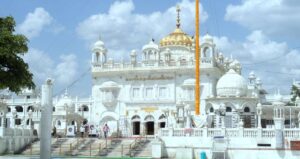

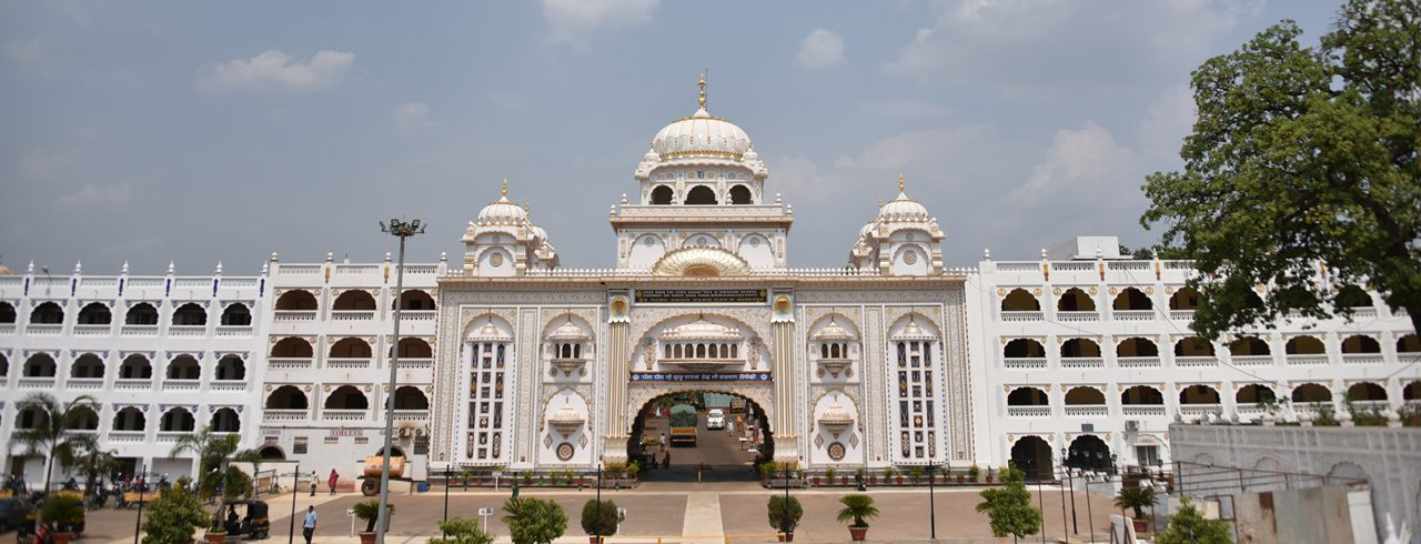
Gurdwara Guru Nanak Jhira Sahib, Bidar, is a major Sikh pilgrimage centre in Karnataka, built around a natural spring traditionally associated with Guru Nanak Dev’s visit to Bidar. The water emerging from the laterite rock remains the defining feature of the shrine, flowing into the Amrit Kund within the Gurdwara complex. The Bidar district administration continues to list the site among the district’s important places of interest, while Karnataka Tourism describes it as one of the very few Sikh pilgrimage centres in South India.
The shrine is interesting not only because of its religious importance but also because of where it stands. Bidar belongs to the Deccan rather than the traditional Sikh heartland of Punjab, and the Gurdwara preserves a memory of Guru Nanak’s travels far from the region most commonly associated with Sikh history.
The tradition of Guru Nanak’s visit to Bidar
The story preserved at Guru Nanak Jhira Sahib places Guru Nanak in Bidar during a period of severe water shortage. According to the tradition, local people approached him for help, and a spring appeared from the laterite rock. The clear water that continues to emerge from the rock is regarded by devotees as the same sacred source associated with that account.
Older Karnataka Tourism material also records the Bidar tradition as part of Guru Nanak’s travels in the Deccan. The historical value of the story for pilgrims lies in the memory of his visit and the community that grew around the place afterward, while the spring gives that tradition a physical presence that visitors can still encounter today.
Why the Jhira is central to the shrine
The word Jhira is inseparable from the spring that gives the Gurdwara its identity. Water from the natural source reaches the Amrit Kund, the sacred water body situated within the complex, so visitors encounter the feature at the centre of the site’s tradition rather than merely hearing about it in a historical account.
Traditional belief attaches spiritual and healing qualities to the water. Karnataka Tourism and the Bidar district administration both mention these beliefs, but they should be understood as matters of faith rather than established medical claims. The religious importance of the water comes from its association with Guru Nanak and the history of the shrine.
A Sikh shrine in the Deccan
Guru Nanak Jhira Sahib has particular importance because it represents Sikh heritage in a part of India where Sikh pilgrimage centres are comparatively uncommon. Karnataka Tourism specifically describes the Gurdwara as one of the very few Sikh pilgrimage centres in South India, giving the site significance beyond Bidar itself.
Its location also changes the way the history is encountered. A visitor arriving in Bidar is entering a city shaped by the Deccan’s Hindu, Persian, Turkish and Islamic influences, and the Gurdwara forms one part of that much broader cultural landscape. Karnataka Tourism describes Bidar as a historic city whose architecture reflects several periods and traditions.
What is inside Guru Nanak Jhira Sahib
The complex has several features that help visitors understand the shrine beyond the main prayer space. The Gurdwara houses the Guru Granth Sahib, while the Amrit Kund, langar hall and Sikh museum provide different ways of experiencing the site. Karnataka Tourism specifically lists these as important parts of the complex.
| Place | Main importance |
|---|---|
| Main Gurdwara | Worship |
| Amrit Kund | Sacred spring water |
| Langar hall | Community meal |
| Sikh museum | Sikh history |
The museum is particularly useful for a visitor unfamiliar with the history of Sikhism in the Deccan. Rather than relying entirely on the spring story, it provides a wider setting for understanding Sikh figures, events and community contributions represented at the shrine.
Langar is part of the experience
The langar at Guru Nanak Jhira Sahib gives the visit a communal dimension. Karnataka Tourism states that the Guru-ka-langar serves free meals to visitors, continuing the Sikh practice of offering food to everyone regardless of background or faith.
For a pilgrim, sitting in langar can be as revealing as seeing the spring. The arrangement is simple: people sit together, food is served and volunteers contribute through seva. It is one of the clearest ways to experience the living character of the Gurdwara rather than viewing it only as a historic destination.
Bidar adds another layer to the visit
Guru Nanak Jhira Sahib can easily be combined with Bidar’s older heritage because the city itself has a substantial collection of historic monuments. Bidar was an important capital of the Bahmani Kingdom, and its surviving architecture reflects the city’s position within the medieval Deccan.
The contrast is worth noticing. The Gurdwara represents Sikh religious memory connected with Guru Nanak, while places such as Bidar Fort reveal a different chapter of the city’s political and architectural history. Visitors interested in the wider heritage of the area can therefore make the Gurdwara part of a broader Bidar itinerary rather than treating it as an isolated stop.
How to reach the Gurdwara
Guru Nanak Jhira Sahib is close to Bidar and does not require the kind of trek associated with remote Himalayan pilgrimage sites. Karnataka Tourism currently lists Bidar Airport and Bidar railway station at about 4 kilometres from the Gurdwara, while Hyderabad Airport remains another option for travellers arriving by air.
| Option | Current detail |
|---|---|
| Rail | Bidar station |
| Air | Bidar Airport |
| Major airport | Hyderabad |
| Local travel | Road transport |
The Bidar district administration also records rail connections from Bengaluru and Hyderabad and road links with major cities. Since transport schedules can change, checking the latest service before travelling is sensible, particularly for flights.
The better months for a Bidar pilgrimage
Bidar is much warmer than the Himalayan destinations covered elsewhere on IndiaSpirituals.com. The district administration recommends October through March as the better period for visiting the city, while Karnataka Tourism identifies October to February as the most comfortable season and notes that March to June can become very hot.
| Period | Typical experience |
|---|---|
| Oct–Feb | Cooler |
| March | Warming |
| Apr–Jun | Very hot |
| Monsoon | Rain possible |
The district administration also notes that Guru Nanak Jhira Sahib receives particularly large numbers of visitors around November and March. Someone combining the pilgrimage with Bidar Fort and other monuments may therefore find the cooler months more comfortable overall.
Visiting the sacred water respectfully
The spring and Amrit Kund are central to the religious identity of the Gurdwara, so visitors should follow the arrangements made at the complex rather than treating the water as an ordinary tourist attraction. Religious belief surrounding the water deserves the same respect as the prayer spaces and Guru Granth Sahib.
Karnataka Tourism advises visitors to cover their heads and remove footwear before entering the Gurdwara complex. Photography may be restricted inside the main prayer hall, so visitors should follow the instructions displayed at the site rather than assuming that photography is permitted everywhere.
Why this Gurdwara matters to Sikh heritage
Guru Nanak Jhira Sahib occupies an unusual place in the Sikh pilgrimage landscape. Its defining story is connected with Guru Nanak’s journey into the Deccan, while the spring associated with that tradition remains part of the physical Gurdwara complex. The shrine has consequently preserved both a religious memory and a living place of worship in South India.
For readers exploring famous Gurdwaras in India, Bidar adds something different from the better-known Punjab and Himalayan pilgrimage circuit. The spring, Amrit Kund, langar and museum tell the story from several angles, while the surrounding Deccan heritage places the shrine within a much older and culturally varied landscape.
FAQ’s
Where is Guru Nanak Jhira Sahib located?
Guru Nanak Jhira Sahib is located in Bidar, Karnataka, and is one of the notable Sikh pilgrimage centres in South India.
Why is Guru Nanak Jhira Sahib famous?
The Gurdwara is particularly known for the natural spring traditionally associated with Guru Nanak’s visit to Bidar and the Amrit Kund supplied by its water.
What is the Amrit Kund?
Amrit Kund is the sacred water body within the Gurdwara complex that receives water from the natural spring.
Is langar available at Guru Nanak Jhira Sahib?
Yes. The Gurdwara operates a Guru-ka-langar where free meals are served to visitors.
When is the best time to visit Guru Nanak Jhira Sahib?
October to February is generally more comfortable for visiting Bidar, while the district administration also identifies November and March as periods when the Gurdwara receives particularly large numbers of visitors.
References
- Bidar District Administration: https://bidar.nic.in
- Karnataka Tourism: https://karnatakatourism.org
- The Sikh Encyclopedia: https://www.thesikhencyclopedia.com