

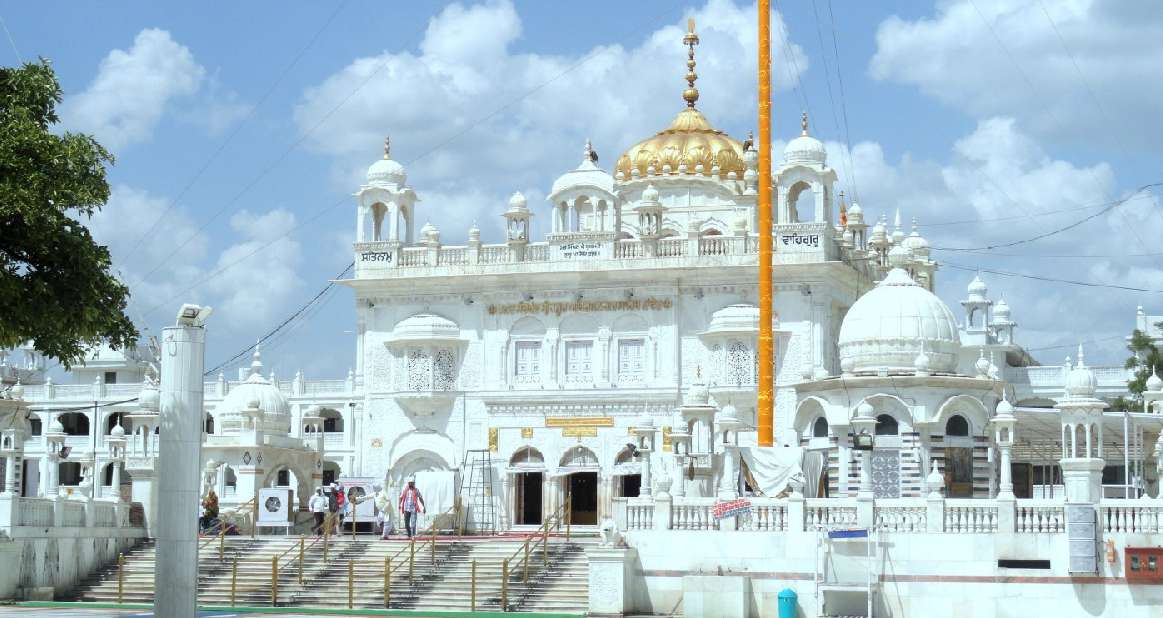
Takht Sri Hazur Sahib in Nanded is one of the five recognized Takhts of Sikhism and the sacred centre associated with the final period of Guru Gobind Singh Ji’s life in 1708. Situated near the Godavari River in Maharashtra, the shrine connects several important events that shaped Sikh history after the creation of the Khalsa. It is associated with the Guru’s final days, the conferment of Guruship upon Guru Granth Sahib Ji and the meeting with Madho Das, who later became known as Banda Singh Bahadur.
Why Takht Sri Hazur Sahib matters
Hazur Sahib has a particular place among the 5 Takhts because its central historical association is not the beginning of the Khalsa but the closing stage of Guru Gobind Singh Ji’s earthly leadership. The official Takht Sachkhand history records that Guru Gobind Singh Ji was at Nanded in 1708 and departed from the world on October 7 of that year.
The significance of Nanded goes further than the location of the Guru’s final days. The city is connected with the transition from the line of human Gurus to the continuing Guruship of Guru Granth Sahib Ji, while the meeting with Madho Das connects Nanded with the later history of Banda Singh Bahadur. This combination gives Hazur Sahib a historical character that is different from the other Takhts.
| Detail | Information |
|---|---|
| Location | Nanded, Maharashtra |
| Status | One of five Takhts |
| Key year | 1708 |
| Main association | Final period of Guru Gobind Singh Ji |
| River | Godavari |
| Railway | Huzur Sahib Nanded |
| Airport | Shri Guru Gobind Singh Ji Airport |
| Airport distance | About 4 km |
Nanded before Hazur Sahib became a Sikh pilgrimage centre
Nanded was already an established settlement on the Godavari before Guru Gobind Singh Ji arrived there. Its importance in Sikh history developed during the Guru’s final journey, when the city became the setting for events that would influence the future direction of the Sikh community.
The transformation of Nanded into a major Sikh pilgrimage centre is therefore closely tied to the Guru’s presence in the city. Today, the central Takht is surrounded by a wider network of historic gurdwaras, accommodation facilities, langar services and religious institutions, creating a pilgrimage environment rather than a single isolated monument.
Guru Gobind Singh Ji’s final chapter at Nanded
The official Takht Sachkhand history gives October 7, 1708, as the date of Guru Gobind Singh Ji’s departure from the world at Nanded. The present Takht commemorates the sacred location associated with this final period.
The name Sachkhand Sri Hazur Abchalnagar Sahib is itself tied to the religious memory of Nanded. The official history explains that Guru Gobind Singh Ji referred to the region as Abchalnagar, while Sachkhand carries a spiritual meaning connected with the abode of truth.
The present building should not be confused with an unchanged structure from 1708. According to the official Takht history, Maharaja Ranjit Singh commissioned the major construction of the gurdwara, with work taking place from 1832 to 1837.
The end of the line of personal Guruship
One of the most consequential events associated with Nanded was Guru Gobind Singh Ji’s decision concerning the future Guruship of the Sikh community. The Takht Sachkhand historical account records that the Guru conferred Guruship upon Granth Sahib Ji before his departure from the world.
This decision gave Sikh religious life a different institutional direction. Rather than naming another human successor, Guru Gobind Singh Ji directed Sikhs toward the scripture as their eternal Guru. For the history of Hazur Sahib, this is as important as the location’s association with the Guru’s final days because it explains why Nanded represents a transition rather than simply an ending.
That distinction also helps place Hazur Sahib alongside the other Takhts. Takht Sri Kesgarh Sahib is associated with the creation of the Khalsa in 1699, whereas Hazur Sahib is associated with the final stage of Guru Gobind Singh Ji’s leadership in 1708.
The meeting with Madho Das
Nanded is also connected with the meeting between Guru Gobind Singh Ji and Madho Das Bairagi. The official Takht Sachkhand history places the encounter in the first week of September 1708 and records that Madho Das was initiated into Sikhism and became known as Banda Singh Bahadur.
The importance of this meeting became clearer after Guru Gobind Singh Ji’s death. Banda Singh Bahadur later travelled toward Punjab and became a major figure in the early eighteenth-century Sikh struggle. His later activities belong to a different phase of history, but their connection with Nanded gives the city a place in the transition from Guru Gobind Singh Ji’s direct leadership to the actions of the Khalsa community.
The story can also be followed through Gurdwara Banda Ghat Sahib, one of the historic sites in the Nanded area associated with this period.
The sacred complex at Hazur Sahib
Takht Sri Hazur Sahib is not a single room or isolated shrine. The wider complex includes the main Takht, Angitha Sahib and Bunga Mai Bhago Ji. The Takht Sachkhand history describes the complex as extending over several hectares and records the richly decorated interior of the principal shrine.
Angitha Sahib is associated with the cremation place of Guru Gobind Singh Ji. Bunga Mai Bhago Ji forms another important part of the complex, adding to the historical layers preserved within the Takht precinct.
The architecture visitors see today therefore belongs to several periods of Sikh history. The sacred associations reach back to 1708, while the principal architectural development of the present building belongs to the nineteenth century.
Historical weapons & relics preserved at Hazur Sahib
Hazur Sahib contains historical weapons and relics associated with Guru Gobind Singh Ji. The official Takht Sachkhand history lists a golden dagger, a matchlock gun, a quiver containing 35 arrows, two bows, a steel shield decorated with precious stones and five golden swords.
These objects give the pilgrimage a physical connection with the Guru’s period. They are preserved within the sacred setting of the Takht rather than being separated into a conventional museum experience.
For visitors interested in Sikh history, this is an important distinction. The objects are encountered as part of an active religious institution whose historical memory continues through daily worship, rather than as exhibits disconnected from religious practice.
Is Hazur Sahib one of the 5 Takhts?
Yes. Takht Sri Hazur Sahib is one of the five recognized Takhts of Sikhism. The Shiromani Gurdwara Parbandhak Committee lists Sri Akal Takht Sahib in Amritsar, Takht Sri Patna Sahib, Takht Sri Kesgarh Sahib in Anandpur Sahib, Takht Sri Hazur Sahib in Nanded and Takht Sri Damdama Sahib in Talwandi Sabo.
Hazur Sahib’s particular identity comes from its connection with Guru Gobind Singh Ji’s final period and the transition to the Guruship of Guru Granth Sahib Ji. That historical role distinguishes it from the other four Takhts without separating it from the wider Sikh tradition of Takht authority.
The wider Sikh pilgrimage in Nanded
The main Takht is the centre of the Nanded pilgrimage, but several other historic gurdwaras help explain why the city has such a strong connection with Guru Gobind Singh Ji’s final period. The Takht Sachkhand historical record identifies sites including Nagina Ghat, Banda Ghat, Sangat Sahib, Baoli Sahib, Mal Tekdi, Shikar Ghat, Hira Ghat and Mata Sahib.
For a visitor, these places can be approached as parts of one historical landscape rather than as unrelated sightseeing stops. Some are connected with particular people or events, while the main Takht provides the central religious context for the entire pilgrimage.
A useful way to explore the wider area is to choose sites according to the historical story rather than trying to collect as many locations as possible:
- Start with the main Takht and understand its connection with Guru Gobind Singh Ji’s final period.
- Explore Angitha Sahib and the associated sacred areas within the main complex.
- Visit Banda Ghat Sahib to understand the connection with Madho Das and Banda Singh Bahadur.
- Add other nearby historic gurdwaras if time permits.
- Leave sufficient time for the daily religious programme and langar.
The Godavari in the daily life of Hazur Sahib
The Godavari is an important part of the physical setting of Hazur Sahib, but its relationship with the Takht goes beyond geography. The official daily schedule states that holy water is brought from the Godavari at 2:00 a.m. for the Ishnan of Takht Sahib.
This small detail reveals how the river remains connected with the daily functioning of the shrine. It is not merely a scenic feature beside a historic gurdwara but part of the ritual routine followed at the Takht.
For visitors, this also creates a useful way to understand Hazur Sahib. The relationship between the shrine and its surroundings is active and continuing, which is one reason the Nanded pilgrimage feels different from visiting a purely historical monument.
The daily rhythm of Hazur Sahib
Hazur Sahib does not need to be understood through conventional tourist opening hours alone. The Takht publishes a detailed religious schedule that begins during the night and continues through the evening.
The official daily schedule lists holy water collection at 2:00 a.m., Prakash of Sri Guru Granth Sahib Ji at 3:15 a.m., Hukumnama at 3:40 a.m. and Asa Ji Di Var beginning at 3:45 a.m. Later services include Katha, Kirtan, Rehras Sahib, Aarti and historical Shashtra Darshan.
| Time | Programme |
|---|---|
| 2:00 a.m. | Holy water from Godavari |
| 3:15 a.m. | Prakash |
| 3:40 a.m. | Hukumnama |
| 3:45 a.m. | Asa Ji Di Var |
| 8:00 a.m. | Katha |
| 6:30 p.m. | Rehras Sahib |
| 7:30 p.m. | Aarti and Shashtra Darshan |
| 8:45 p.m. | Kirtan Sohila |
The published timetable is particularly useful for pilgrims who want to experience the Takht as a living religious centre. Special occasions can alter the normal programme, so the current schedule should be checked before travelling for a particular ceremony.
Takht Sri Hazur Sahib visiting guide
Hazur Sahib is situated in the heart of Nanded and is close to the city’s principal transport facilities. The Nanded District Administration places Huzur Sahib Nanded railway station approximately 1 kilometre from the gurdwara, Shri Guru Gobind Singh Ji Airport around 4 kilometres away and the Nanded bus stand around 1.5 kilometres away.
This makes the main pilgrimage site relatively easy to reach after arriving in Nanded. The practical situation can change during major Gurpurabs and other large gatherings, when local traffic and accommodation demand may be considerably higher.
How to reach Takht Sri Hazur Sahib
Nanded has its own airport, railway station and road connections. The Nanded District Administration confirms that Shri Guru Gobind Singh Ji Airport serves the city and that Huzur Sahib Nanded is the principal railway station.
| Travel option | Information |
|---|---|
| Railway | Huzur Sahib Nanded |
| Airport | Shri Guru Gobind Singh Ji Airport |
| Airport distance | About 4 km |
| Railway distance | About 1 km |
| Bus stand | About 1.5 km |
For long-distance pilgrims, rail can be a convenient choice because Nanded has connections with major cities. Air travel is another option for visitors whose routes connect conveniently with Nanded Airport.
Takht Sri Hazur Sahib from major cities
Nanded is connected by rail with cities including Mumbai, Pune and Hyderabad, while air travellers can use Shri Guru Gobind Singh Ji Airport. The official Takht Sachkhand travel information provides route information for visitors planning their journey.
Because train schedules, flight schedules and road conditions can change, travellers should verify their particular service before departure. Once in Nanded, the short distance between the main transport points and Hazur Sahib makes the final part of the journey comparatively straightforward.
Takht Sri Hazur Sahib visiting hours
Hazur Sahib operates according to a detailed daily religious programme rather than a simple tourist timetable. The official schedule begins in the early hours and continues through evening services.
Visitors who want to attend a particular programme should consult the official daily schedule before travelling. Special religious occasions may include additional programmes or changes to the ordinary schedule.
Who can enter Takht Sri Hazur Sahib?
The rules concerning the hallowed enclosure of a Takht are more specific than ordinary gurdwara visitation. The Sikh Rehat Maryada states that only an Amritdhari Sikh who faithfully observes the discipline prescribed for baptized Sikhs can enter the hallowed enclosures of the Takhts.
This should not be confused with the wider pilgrimage environment. Visitors should follow the directions of the Takht management and sevadars about access to particular areas and maintain the usual respectful conduct expected at a Sikh place of worship.
Accommodation at Hazur Sahib
Hazur Sahib has extensive accommodation facilities for pilgrims. The official Takht Sachkhand accommodation information lists Sri Guru Gobind Singh Ji NRI Yatri Niwas, Sri Guru Angad Dev Ji Yatri Niwas, Sher-e-Punjab Maharaja Ranjit Singh Ji Yatri Niwas and Sri Guru Ramdas Ji and Baba Nand Singh Ji Yatri Niwas.
The published information gives a combined picture of several hundred rooms across these facilities, with different types of accommodation available. The official room-booking system allows pilgrims to check availability and make reservations according to the current booking conditions.
The Takht’s booking information also states that the accommodation facilities are for pilgrims and identifies several properties within about 200 metres of the Takht Sahib. Visitors travelling during major gatherings should check availability before finalizing their plans.
Langar & other pilgrim services
Hazur Sahib has developed an extensive support system around the pilgrimage. The Takht Sachkhand management information states that devotees can receive Guru Ka Langar and that the main langar hall can accommodate large numbers of people.
The management board also lists medical and community services associated with the Nanded institutions. These include a charitable dispensary, Dashmesh Hospital, educational facilities and other community initiatives. Such services demonstrate that Hazur Sahib functions as a wider religious and social institution rather than only as a place visited for darshan.
Important 2026 dates at Hazur Sahib
The Takht’s official calendar provides current information for pilgrims planning around major religious occasions. Its 2026 listings include Khalsa Sajna Diwas on April 14 and Mahalla Vaisakhi at Sri Hazur Sahib on April 15, while later listings include several Gurpurabs and other observances through September.
The official 2026 events calendar should be checked close to the date of travel because religious programmes and practical arrangements can change. Major gatherings can also increase demand for accommodation and transport.
A practical 1 day Hazur Sahib pilgrimage
A one-day visit can work well when the itinerary is built around the religious character of the Takht rather than an attempt to visit every gurdwara in Nanded. The central complex deserves enough time for darshan, and visitors who are interested in the historical story can then add one or two nearby sites connected with Guru Gobind Singh Ji’s final period.
A practical sequence would be:
- Begin at the main Takht and understand its connection with Guru Gobind Singh Ji’s final days.
- Explore the associated sacred areas, including Angitha Sahib.
- Check the daily schedule and attend an appropriate programme if possible.
- Visit Banda Ghat Sahib or another nearby historic gurdwara.
- Allow time for langar rather than treating the visit as a quick stop.
- Keep part of the day flexible because religious programmes can take priority over a sightseeing schedule.
This approach gives the visitor a coherent understanding of Nanded without turning the pilgrimage into a checklist. It also leaves room for the daily religious rhythm that is central to the identity of Hazur Sahib.
What makes Hazur Sahib different from a historical monument
A conventional heritage site generally asks visitors to look backward at an event that has already ended. Hazur Sahib combines historical memory with an active religious routine that continues throughout the day. The distinction can be seen in several practical details:
- The Takht maintains a detailed daily religious schedule.
- Holy water is brought from the Godavari as part of the early-morning routine.
- Guru Ka Langar continues to serve pilgrims.
- Yatri Niwas facilities support visitors staying in Nanded.
- Historical weapons and relics remain within the sacred complex.
- The surrounding gurdwaras preserve connected stories from the same period.
This combination is what makes a visit to Hazur Sahib different from simply visiting a monument associated with Guru Gobind Singh Ji. The history is still present, but it is experienced within an institution that continues to function as a place of worship and community service.
Best time to visit Takht Sri Hazur Sahib
The best time depends on the purpose of the journey. Visitors looking for a quieter experience may prefer a period outside major festivals, when there is more flexibility to follow the daily schedule and visit the surrounding gurdwaras without the largest crowds.
Those who want to experience Hazur Sahib during a major Sikh gathering can plan around the dates listed by the Takht. Such visits can offer a very different atmosphere, but accommodation and local movement require more advance planning.
For a historical pilgrimage rather than a festival visit, allowing more than one day is useful. Nanded’s Sikh heritage extends beyond the main Takht, and rushing through several sites can reduce the value of the visit.
What makes Takht Sri Hazur Sahib distinctive
Several details explain the particular place of Hazur Sahib within Sikh pilgrimage:
- It is one of the five recognized Sikh Takhts.
- It is associated with the final period of Guru Gobind Singh Ji’s earthly life.
- Guru Gobind Singh Ji departed from the world at Nanded in 1708.
- The site is associated with the transition to the Guruship of Guru Granth Sahib Ji.
- Nanded is connected with Guru Gobind Singh Ji’s meeting with Madho Das, later Banda Singh Bahadur.
- Historical weapons and relics associated with the Guru’s period are preserved at the Takht.
- The Godavari forms part of the shrine’s daily religious routine.
- The complex continues to provide worship, langar and pilgrim services.
FAQ’s
Where is Takht Sri Hazur Sahib?
Takht Sri Hazur Sahib is located in Nanded, Maharashtra, near the Godavari River. It stands in the central part of the city and is close to the main railway station and airport.
Why is Hazur Sahib important to Sikhs?
Hazur Sahib is one of the five recognized Takhts and is associated with the final period of Guru Gobind Singh Ji’s life. It is also connected with the transition to the Guruship of Guru Granth Sahib Ji.
What happened at Hazur Sahib in 1708?
Guru Gobind Singh Ji spent his final period at Nanded and, according to the official Takht Sachkhand historical account, departed from the world there on October 7, 1708.
Is Hazur Sahib one of the five Takhts?
Yes. The five recognized Takhts are Sri Akal Takht Sahib, Takht Sri Patna Sahib, Takht Sri Kesgarh Sahib, Takht Sri Hazur Sahib and Takht Sri Damdama Sahib.
Who was Madho Das?
Madho Das was a Bairagi ascetic whom Guru Gobind Singh Ji met at Nanded in 1708. He was initiated into Sikhism and became known as Banda Singh Bahadur, who later played an important role in Sikh history.
Can everyone enter the hallowed enclosure of Hazur Sahib?
The Sikh Rehat Maryada states that only an Amritdhari Sikh who observes the prescribed discipline for baptized Sikhs can enter the hallowed enclosures of the Takhts. Visitors should follow the instructions of the Takht management regarding access to specific areas.
How far is Hazur Sahib from Nanded railway station?
Huzur Sahib Nanded railway station is approximately 1 kilometre from the gurdwara according to the Nanded District Administration.
How far is Hazur Sahib from the airport?
Shri Guru Gobind Singh Ji Airport is approximately 4 kilometres from the gurdwara.
Is accommodation available at Hazur Sahib?
Yes. The Takht operates several Yatri Niwas facilities for pilgrims. Availability depends on the current booking situation and the applicable accommodation conditions.
Does Hazur Sahib have a daily religious schedule?
Yes. The official schedule begins during the early hours and continues through evening programmes. Visitors should check the current schedule when planning to attend a particular service.
When is the best time to visit Hazur Sahib?
A quieter visit is generally easier to plan outside major festival periods. Visitors who want to experience major Sikh gatherings can instead use the Takht’s official events calendar to plan around specific dates.
References
- Shiromani Gurdwara Parbandhak Committee. 5 Takht Sahibs: SGPC
- Shiromani Gurdwara Parbandhak Committee. Sikh Rehat Maryada: SGPC
- Government of Maharashtra. Sachkhand Gurudwara of Nanded: Nanded District Administration
- Takht Sachkhand Sri Hazur Abchalnagar Sahib. History: Takht Sachkhand
- Takht Sachkhand Sri Hazur Abchalnagar Sahib. Daily schedule: Takht Sachkhand
- Takht Sachkhand Sri Hazur Abchalnagar Sahib. Accommodation: Takht Sachkhand
- Takht Sachkhand Sri Hazur Abchalnagar Sahib. Upcoming events: Takht Sachkhand