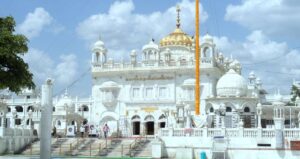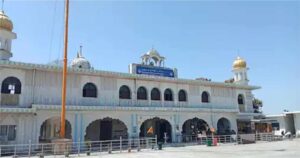

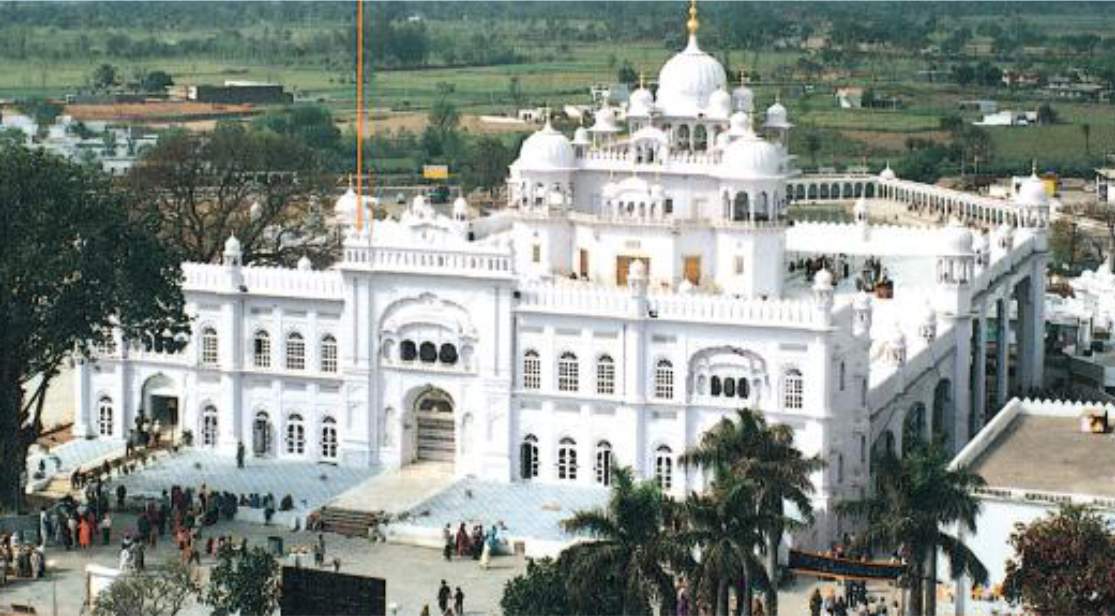
Takht Sri Kesgarh Sahib is one of the 5 recognized Sikh Takhts and the historic shrine at Anandpur Sahib associated with the creation of the Khalsa in 1699. The place is more than a monument to a single ceremony. It stands within a city shaped by Guru Tegh Bahadur Sahib and Guru Gobind Singh Ji, preserves historical weapons associated with Guru Gobind Singh Ji, and remains an active centre of Sikh worship and Amrit Sanchar.
Why Takht Sri Kesgarh Sahib is important
Takht Sri Kesgarh Sahib has a distinctive place among the five Takhts because of its direct association with the formation of the Khalsa. The historic Vaisakhi gathering of 1699 at Anandpur Sahib transformed the religious and social organization of the Sikh community under Guru Gobind Singh Ji.
The Shiromani Gurdwara Parbandhak Committee recognizes Takht Sri Kesgarh Sahib as one of the five Takhts and describes the Takhts as important centres of inspiration and authority for the Khalsa Panth.
| Detail | Information |
|---|---|
| Location | Anandpur Sahib, Punjab |
| District | Rupnagar |
| Status | One of five Takhts |
| Key event | Creation of Khalsa |
| Year | 1699 |
| Associated Guru | Guru Gobind Singh Ji |
| Railway station | Sri Anandpur Sahib |
| Nearest airport | Chandigarh |
Anandpur Sahib before the Khalsa
The history of Kesgarh Sahib begins before the famous Vaisakhi gathering. According to the Rupnagar District Administration, Guru Tegh Bahadur Sahib established the settlement at Makhowal in 1723, which developed into Anandpur Sahib. The town later became closely associated with Guru Gobind Singh Ji and the formative years of his leadership.
Anandpur was therefore already an important Sikh centre when the Khalsa was created. Its religious importance, connections with the Sikh Gurus and developing defensive landscape provided the setting for events that would later make the town one of the most significant pilgrimage destinations in Sikh history.
The Vaisakhi gathering of 1699
The central event associated with Takht Sri Kesgarh Sahib took place on Vaisakhi in 1699. The official Rupnagar District Administration account records the traditional Sikh account in which Guru Gobind Singh Ji called upon the assembled congregation for a volunteer willing to offer his head.
Five men answered the call and became known as the Panj Pyare, or Five Beloved Ones. Guru Gobind Singh Ji prepared Amrit and initiated them into the Khalsa. The traditional account further records that the Guru himself then received Amrit from the Panj Pyare, creating a remarkable reciprocal relationship between Guru and Khalsa.
The 5 Panj Pyare were:
- Bhai Daya Singh
- Bhai Dharam Singh
- Bhai Himmat Singh
- Bhai Mohkam Singh
- Bhai Sahib Singh
The importance of the event lies in the new collective identity and initiation tradition established through it. For Sikh history, 1699 marks a decisive stage in the development of the Khalsa Panth.
The five Ks and Khalsa identity
The Khalsa tradition became associated with five articles of faith commonly known as the five Ks. They provided an identifiable form of religious discipline and remain central to the identity of initiated Khalsa Sikhs.
| Article | Common name |
|---|---|
| Kesh | Uncut hair |
| Kangha | Comb |
| Kara | Steel bracelet |
| Kachhera | Special undergarment |
| Kirpan | Sword |
The Rupnagar District Administration includes these five articles in its account of the 1699 ceremony. The five Ks are part of Khalsa discipline, while Amrit Sanchar is the initiation ceremony through which a person enters the Khalsa tradition.
The weapons preserved at Kesgarh Sahib
One of the most distinctive details of Takht Sri Kesgarh Sahib is the preservation of historical weapons inside the complex. The Rupnagar District Administration states that a room in the central hall displays twelve weapons associated with Guru Gobind Singh Ji.
This collection gives visitors a physical connection with the period in which the Sikh community developed a strong martial dimension. The weapons are preserved within the sacred setting of the Takht, rather than being presented simply as objects in an unrelated historical museum.
Their presence also helps visitors understand why the history of Anandpur Sahib contains both spiritual and martial elements. The creation of the Khalsa took place during a period when questions of religious identity, community organization and defence were increasingly connected.
Is Kesgarh Sahib among the 5 Takhts?
Yes. Takht Sri Kesgarh Sahib is one of the five recognized Takhts of Sikhism. The Shiromani Gurdwara Parbandhak Committee lists it alongside Sri Akal Takht Sahib in Amritsar, Takht Sri Patna Sahib, Takht Sri Hazur Sahib and Takht Sri Damdama Sahib.
Its particular historical identity comes from Anandpur Sahib’s association with the creation of the Khalsa in 1699. This makes Kesgarh Sahib distinct among the five Takhts while placing it within the wider religious and institutional history of the Sikh Panth.
The wider historic landscape of Anandpur Sahib
Kesgarh Sahib is the principal Takht in Anandpur Sahib, but the city’s historical importance extends well beyond one shrine. Several gurdwaras and historic sites in and around the town are connected with Guru Tegh Bahadur Sahib, Guru Gobind Singh Ji and the period in which Anandpur became a major Sikh centre.
Among the important places are:
- Gurdwara Sis Ganj Sahib
- Gurdwara Bhora Sahib
- Gurdwara Guru Ka Mahal
- Gurdwara Qila Anandgarh Sahib
- Gurdwara Qila Lohgarh Sahib
- Gurdwara Qila Holgarh Sahib
The Rupnagar District Administration includes Sri Keshgarh Sahib among the district’s principal places of historical and religious interest. The wider city is therefore best approached as a connected pilgrimage landscape rather than as a destination centred on one building.
Anandpur Sahib and its fort history
The story of Kesgarh Sahib is closely tied to the fortified landscape that developed around Anandpur Sahib during Guru Gobind Singh Ji’s period. The town’s historic qilas preserve memories of the defensive conditions surrounding the Sikh community during a turbulent period.
The Shiromani Gurdwara Parbandhak Committee records the historical connection between Anandpur’s forts and the period of Guru Gobind Singh Ji. Kesgarh Sahib represents the religious centre of this landscape, while the qilas help explain the military circumstances surrounding Anandpur’s later history.
This connection is important when visiting the city because the historic sites are not isolated stories. Together they show how Anandpur developed as a religious, communal and defensive centre.
Hola Mohalla at Anandpur Sahib
Anandpur Sahib is also strongly associated with Hola Mohalla, an annual Sikh festival connected with religious gatherings, community activity and demonstrations of martial traditions.
The festival developed during the period of Guru Gobind Singh Ji and has a character distinct from Holi. Its connection with Anandpur adds another living dimension to the city’s historical identity, particularly for visitors interested in the martial traditions associated with the Khalsa.
Festival programmes and local arrangements can change each year, so travellers planning specifically around Hola Mohalla should check the current official schedule before departure.
Amrit Sanchar at Takht Sri Kesgarh Sahib
Takht Sri Kesgarh Sahib remains an active religious institution rather than functioning only as a historical memorial. The SGPC’s official Five Takhts information states that Amrit Sanchar at Takht Sri Kesgarh Sahib is organized every Sunday and Wednesday, as well as on historical days and Gurpurabs, at 12 noon.
This continuing practice gives the Takht a direct connection with the Khalsa tradition established at Anandpur Sahib. The ceremony associated with entering the Khalsa continues at the same sacred centre whose history is inseparable from the creation of the Khalsa.
Anyone travelling specifically for Amrit Sanchar should confirm the current programme before leaving, particularly around major religious gatherings.
Takht Sri Kesgarh Sahib visiting guide
Takht Sri Kesgarh Sahib stands on a hillock in Anandpur Sahib. According to the Rupnagar District Administration, visitors approach the shrine along a cobbled path, pass through the Darshani Deorhi and enter a large marble courtyard before reaching the central shrine.
The same official source states that a sarai of about 200 rooms is attached to the complex. Pilgrims who intend to stay there should confirm current availability and arrangements rather than assuming that accommodation is guaranteed.
How to reach Takht Sri Kesgarh Sahib
Anandpur Sahib is connected by road and rail, making the Takht accessible from Chandigarh and other parts of Punjab. The official district information identifies Sri Anandpur Sahib railway station as the nearest railway station and Chandigarh as the nearest airport.
| Travel option | Information |
|---|---|
| Railway | Sri Anandpur Sahib |
| Airport | Chandigarh |
| From Chandigarh | About 102 km |
| From Rupnagar | About 60 km |
| Road access | Rupnagar-Nangal route |
The Rupnagar District Administration’s travel information provides additional information for reaching the district by road and rail.
Takht Sri Kesgarh Sahib from Chandigarh
For travellers starting from Chandigarh, Anandpur Sahib is approximately 102 kilometres away according to the official district tourism information. Road travel is a practical option for those travelling independently, while rail passengers can use Sri Anandpur Sahib station.
The actual journey time can vary with traffic, weather and road conditions, so it is better to plan around the distance rather than depend on a fixed travel-time estimate.
Takht Sri Kesgarh Sahib visiting hours
A reliable official 2026 daily opening-and-closing timetable could not be verified from the primary sources reviewed. It would therefore be misleading to publish an exact daily schedule without confirmation.
Visitors travelling for Amrit Sanchar, Vaisakhi, Hola Mohalla or another specific religious programme should confirm the relevant timing before departure.
Who can visit Takht Sri Kesgarh Sahib?
Visitors from different backgrounds can enter the gurdwara respectfully. Ordinary darshan does not require special religious eligibility, but everyone is expected to follow the established etiquette of the shrine.
Visitors should:
- Cover the head before entering the religious area.
- Remove footwear where required.
- Wear respectful clothing.
- Follow instructions from sevadars.
- Maintain appropriate conduct inside the Darbar Sahib.
- Observe photography restrictions where applicable.
- Avoid touching historical weapons or protected objects.
Best time to visit Takht Sri Kesgarh Sahib
The best time depends on the purpose of the journey. Vaisakhi has the strongest historical connection because it commemorates the creation of the Khalsa in 1699, but it can also bring substantially larger crowds to Anandpur Sahib.
Hola Mohalla offers a different experience, particularly for visitors interested in Sikh martial traditions and large community gatherings. Those seeking a quieter visit may prefer a period outside major festivals, when there is generally more opportunity to explore Kesgarh Sahib and the surrounding historic sites at a slower pace.
For visitors travelling specifically for Amrit Sanchar, the current ceremony schedule is more important than choosing a particular season.
What makes Kesgarh Sahib distinctive
Several features explain why Takht Sri Kesgarh Sahib occupies such an important place in Sikh pilgrimage:
- One of the 5 recognized Sikh Takhts.
- Historic site associated with the creation of the Khalsa in 1699.
- Associated with the Panj Pyare and Amrit initiation.
- Connected with the traditional account of Guru Gobind Singh Ji receiving Amrit from the Panj Pyare.
- Preserves twelve weapons associated with Guru Gobind Singh Ji, according to the district administration.
- Continues to host Amrit Sanchar.
- Forms part of Anandpur Sahib’s wider network of historic gurdwaras and qilas.
- Remains an active place of worship rather than only a heritage monument.
FAQ’s
Where is Takht Sri Kesgarh Sahib?
Takht Sri Kesgarh Sahib is located in Anandpur Sahib, Rupnagar district, Punjab, India.
Why is Takht Sri Kesgarh Sahib famous?
It is principally associated with the creation of the Khalsa by Guru Gobind Singh Ji in 1699 and is one of the five recognized Sikh Takhts.
What happened at Kesgarh Sahib in 1699?
On Vaisakhi in 1699, Guru Gobind Singh Ji gathered Sikhs at Anandpur Sahib, called for volunteers willing to offer their heads, initiated the five men who became the Panj Pyare and established the Khalsa initiation tradition.
Who were the Panj Pyare?
The Panj Pyare were Bhai Daya Singh, Bhai Dharam Singh, Bhai Himmat Singh, Bhai Mohkam Singh and Bhai Sahib Singh.
What are the five Ks?
The five Ks are Kesh, Kangha, Kara, Kachhera and Kirpan, the five articles of faith associated with Khalsa identity.
Is Kesgarh Sahib one of the five Takhts?
Yes. The five recognized Takhts are Sri Akal Takht Sahib, Takht Sri Kesgarh Sahib, Takht Sri Patna Sahib, Takht Sri Hazur Sahib and Takht Sri Damdama Sahib.
Can non-Sikhs visit Takht Sri Kesgarh Sahib?
Yes. Visitors of different backgrounds can visit respectfully while following the gurdwara’s religious etiquette.
Is Amrit Sanchar held at Kesgarh Sahib?
Yes. The SGPC states that Amrit Sanchar is held every Sunday and Wednesday, as well as on historical days and Gurpurabs, at 12 noon. Visitors should confirm the current arrangement before travelling.
How far is Kesgarh Sahib from Chandigarh?
Anandpur Sahib is approximately 102 kilometres from Chandigarh according to the official Rupnagar district tourism information.
Which railway station is nearest?
Sri Anandpur Sahib railway station is the nearest railway station identified by the district administration.
Does Kesgarh Sahib have accommodation?
The official district tourism page states that a sarai of about 200 rooms is attached to the complex. Availability and current arrangements should be confirmed before travel.
Is there a fixed daily visiting time?
A reliable official 2026 daily opening-and-closing timetable could not be verified. Visitors attending a particular ceremony should confirm the current schedule.
References
- Shiromani Gurdwara Parbandhak Committee. 5 Takht Sahibs: SGPC
- Rupnagar District Administration, Government of Punjab. Sri Keshgarh Sahib, Sri Anandpur Sahib: Rupnagar District Administration
- Rupnagar District Administration, Government of Punjab. History: Rupnagar District Administration
- Rupnagar District Administration, Government of Punjab. Tourist Places: Rupnagar District Administration
- Rupnagar District Administration, Government of Punjab. How to Reach: Rupnagar District Administration
- Shiromani Gurdwara Parbandhak Committee. Historical Qilas: SGPC