
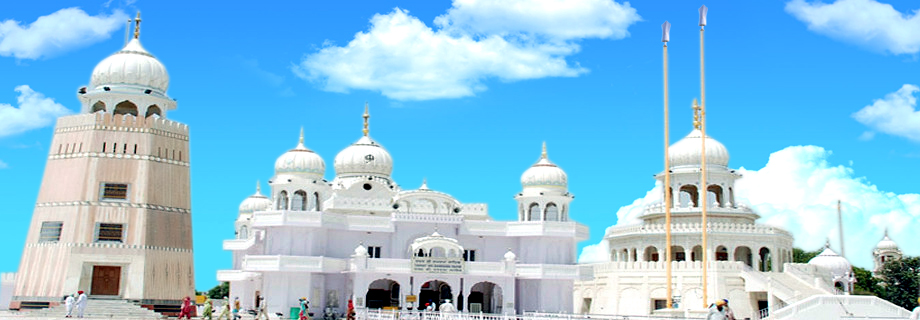
Takht Sri Damdama Sahib, Talwandi Sabo, is one of the five recognized Takhts of Sikhism and one of the places most closely associated with Guru Gobind Singh Ji’s work with Sikh learning, Gurbani and the Khalsa community. After the difficult period surrounding Anandpur Sahib, Chamkaur Sahib and Muktsar, Guru Gobind Singh Ji came to Talwandi Sabo in the Malwa region in 1706. His extended stay transformed the place from a resting point into a centre remembered as Guru Ki Kashi. The present Takht is therefore important not only because of what happened there in the eighteenth century, but because of the intellectual and religious tradition that grew around the site.
Talwandi Sabo before it became Guru Ki Kashi
Talwandi Sabo had a Sikh history before Guru Gobind Singh Ji made it one of the best-known centres of his later years. The Bathinda District Administration records an earlier association with Guru Tegh Bahadur Sahib and a traditional visit by Guru Nanak Dev Ji in 1510.
Guru Gobind Singh Ji’s arrival gave the town a new historical direction. According to the district administration, the Guru reached Talwandi Sabo after the conflicts at Anandpur Sahib, Chamkaur Sahib and Muktsar and stayed there for nine months and nine days. The site became associated with the Guru’s rest, giving rise to the name Damdama Sahib, while its later reputation as a place of learning gave Talwandi Sabo the name Guru Ki Kashi.
The two names tell different parts of the story. Damdama preserves the memory of the Guru’s stay and rest, while Guru Ki Kashi reflects what the place became during that stay and afterward.
9 months and nine days that changed the town
The length of Guru Gobind Singh Ji’s stay is one of the most revealing facts about Damdama Sahib. Nine months and nine days is considerably different from a brief halt during a journey. It gave the Guru time to establish a sustained centre of religious activity in the Malwa region.
The SGPC’s current account of Takht Sri Damdama Sahib describes Talwandi Sabo as a centre associated with Sikh writers and scholars. The town consequently became connected with activities that required patience and continuity: teaching, writing, study, interpretation of Gurbani and strengthening the Sikh community.
This is the point at which the history of Damdama Sahib begins to differ sharply from the usual story of a pilgrimage site. The importance of the place was not created by one isolated event. It developed during an extended period in which religious knowledge and community life were being consolidated.
Why Guru Ki Kashi became the defining name
The name Guru Ki Kashi is closely connected with the educational character of Talwandi Sabo. The SGPC’s historical account describes the area as a centre where Gurbani was studied, written and taught and associates this tradition with Baba Deep Singh Ji.
Kashi was historically famous as a centre of learning. Calling Talwandi Sabo Guru Ki Kashi therefore placed emphasis on scholarship rather than on physical resemblance to the ancient city of Kashi. In the Sikh context, the title points to the importance given to religious knowledge at this location.
That makes the name more than a ceremonial description. It provides a useful key to understanding why Damdama Sahib became one of the five Takhts and why the town continues to attract visitors interested in Sikh scripture and learning.
The scripture work associated with Damdama Sahib
Damdama Sahib occupies an important position in the later history of Sikh scripture. The SGPC’s account of Guru Gobind Singh Ji and its material on the Takht connect the Damdama period with the incorporation of the bani of Guru Tegh Bahadur Sahib into the scripture and the preparation of the recension associated with Guru Gobind Singh Ji.
This does not mean that the entire history of Guru Granth Sahib Ji began at Talwandi Sabo. The Adi Granth had already been compiled under Guru Arjan Sahib in 1604. Damdama Sahib belongs to the later stage of that history, when Guru Gobind Singh Ji’s period included important work concerning the scripture and the transmission of Gurbani.
That distinction is important because it places Talwandi Sabo within the longer development of Sikh scripture rather than reducing the story to a claim that the Guru Granth Sahib was simply “written here.”
Bhai Mani Singh and the work of preservation
The history of a sacred text is also a history of the people who preserve and transmit it. Damdama Sahib is associated with Bhai Mani Singh, whose name appears in the SGPC’s historical account in connection with the writing work during the Damdama period.
This gives the site a practical scholarly dimension. Writing Gurbani was not an abstract activity. It involved careful preservation of the text, transmission of knowledge and the creation of copies that could be studied and used by the Sikh community.
For visitors interested in the history of manuscripts, this is one of the strongest reasons to spend time understanding Damdama Sahib beyond its status as a Takht.
Baba Deep Singh and the tradition of Sikh scholarship
Baba Deep Singh Ji is another major figure in the intellectual history associated with Talwandi Sabo. The SGPC records a centre connected with reading, writing, study and interpretation of Gurbani under Baba Deep Singh Ji’s supervision.
His association helps explain why the expression Guru Ki Kashi endured. The town was not merely remembered for having hosted a learned gathering. A tradition of study and teaching became part of its religious identity.
This scholarly history also gives the surrounding historic gurdwaras greater meaning. Places such as Likhansar Sahib and the sites associated with Baba Deep Singh Ji can be understood as parts of a wider landscape of learning rather than unrelated stops on a pilgrimage itinerary.
A place where the Khalsa community was strengthened
The Damdama period also belonged to the development of the Khalsa in the Malwa region. The SGPC’s historical material records that Guru Gobind Singh Ji strengthened the Khalsa during his stay and initiated people from the region.
This side of Damdama Sahib is sometimes overshadowed by its scripture history, but it is important. The town became a place where religious education and community organization existed together.
The historical picture is therefore broader than a Guru sitting with scripture. Talwandi Sabo was also a place where people gathered, learned, received guidance and became part of the growing Khalsa community.
The 3 sarovars of Talwandi Sabo
The sacred geography of Talwandi Sabo extends beyond the main Takht. The Bathinda District Administration identifies three important sarovars associated with different periods of Sikh history.
| Sarovar | Association |
|---|---|
| Nanksar | Guru Nanak Dev Ji |
| Akalsar | Guru Gobind Singh Ji |
| Gurusar | Guru Tegh Bahadur Sahib |
The district administration associates Nanksar with the traditional visit of Guru Nanak Dev Ji and Gurusar with Guru Tegh Bahadur Sahib, while Akalsar is associated with Guru Gobind Singh Ji.
Taken together, these three water bodies show why Talwandi Sabo cannot be understood through one building alone. The town carries memories associated with more than one Guru and more than one period of Sikh history.
Historic gurdwaras around the Takht
The main Takht provides the centre of the pilgrimage, but several nearby gurdwaras help visitors understand the historical landscape of Talwandi Sabo. The SGPC identifies several places of importance, including:
- Gurdwara Sri Guru Tegh Bahadur Sahib
- Gurdwara Nanaksar Sahib
- Gurdwara Manji Sahib
- Gurdwara Likhansar Sahib
- Gurdwara Jand Sahib
- Burj Baba Deep Singh Ji
A visitor does not need to cover every site in one day. Choosing a few places according to their historical connection with the Guru, scripture or Sikh learning can produce a more meaningful visit than following a checklist.
When Damdama Sahib became the fifth Takht
The historical importance of Talwandi Sabo and its modern institutional status as a Takht belong to different periods. The SGPC records that its administration of the historic site began in 1960 and that the present grand Takht building was constructed in 1965–66. Its current official Takht page describes Damdama Sahib as the fifth Takht.
The SGPC’s current Five Takhts page lists Damdama Sahib alongside Sri Akal Takht Sahib, Takht Sri Kesgarh Sahib, Takht Sri Patna Sahib and Takht Sri Hazur Sahib.
This distinction matters because the sacred history of Talwandi Sabo is much older than the present building. The eighteenth-century association with Guru Gobind Singh Ji and the later development of the Takht belong to different chapters of the same place.
The present Takht and its historical objects
The present Takht building dates from 1965–66 according to the current SGPC page. The SGPC also states that historical objects are shown to the congregation in the morning and evening.
This gives the present complex a dual character. Its architecture belongs largely to the modern period, while its religious importance reaches back to Guru Gobind Singh Ji’s time.
For a visitor, that difference is useful to remember. The building should not be mistaken for an untouched eighteenth-century structure. Its importance comes from the sacred and historical memory associated with the location, together with the living religious institution that occupies it today.
Damdama Sahib in 2026
The official sources currently available in 2026 confirm that Takht Sri Damdama Sahib remains an active Sikh pilgrimage centre in Talwandi Sabo. The current SGPC page is actively maintained, while the Bathinda District Administration currently lists the Takht among the district’s important places of interest.
The practical information that can change over time should be checked close to the journey. This is particularly important for accommodation, religious programmes, road conditions and festival arrangements.
Rather than publishing an unsupported fixed opening timetable, it is better to treat the Takht as an active place of worship whose religious programme can determine how a visit unfolds.
How to reach Takht Sri Damdama Sahib
Talwandi Sabo is in Bathinda district, Punjab. The Bathinda District Administration currently places the town approximately 30 kms from Bathinda and identifies Bathinda Junction as the nearby railway station at roughly the same distance.
Bathinda Airport is approximately 55 kms away. Road connections from Bathinda make the final part of the journey relatively straightforward.
| Travel point | Approximate distance |
|---|---|
| Bathinda city | 30 km |
| Bathinda Junction | 30 km |
| Bathinda Airport | 55 km |
Travellers should verify their train, flight and local road arrangements immediately before departure because transport schedules can change.
Visiting from Chandigarh and other cities
For visitors coming from Chandigarh, Delhi or other parts of Punjab and northern India, Bathinda is a useful transport reference point. The final journey to Talwandi Sabo is by road after reaching the Bathinda area.
The district administration’s current information confirms the approximate distance from Bathinda but does not establish one universal journey time. Traffic, road conditions and the chosen route can make the actual travel duration different.
For a pilgrimage covering several sites in Talwandi Sabo, planning only around the direct distance can result in too little time at the destination.
Amrit Sanchar at Damdama Sahib
The current SGPC Five Takhts information states that Amrit Sanchar at Takht Sri Damdama Sahib is organized every Sunday, on Amavas and on historical days and Gurpurabs at 12 noon.
Anyone travelling specifically to participate should confirm the arrangement before departure, particularly when a major religious occasion is approaching. A scheduled ceremony can also change the practical rhythm of a visit.
Amrit Sanchar has a direct historical connection with the identity of Damdama Sahib because the site is associated with Guru Gobind Singh Ji’s strengthening of the Khalsa in the Malwa region.
Who can visit and what should visitors observe?
A gurdwara is open to respectful visitors regardless of religious background, but a Takht should be approached as a place of worship rather than as an ordinary tourist attraction. As a visitor, you should:
- Cover the head before entering the Darbar Sahib.
- Remove footwear where required.
- Wear respectful clothing.
- Follow directions from sevadars.
- Maintain appropriate conduct during prayers and ceremonies.
- Observe any current restrictions on photography.
- Avoid disturbing worshippers or religious services.
Participation in Amrit Sanchar is different from ordinary visitation and carries its own religious requirements.
Accommodation and langar
The SGPC’s current information states that accommodation and langar-prasad facilities are available at Damdama Sahib. The published information lists 26 rooms and six hall rooms with bathroom facilities, along with a dispensary and a Gurmat literature house.
Because accommodation capacity is limited, visitors should confirm availability before relying on the Takht’s facilities, especially when travelling around major Sikh gatherings.
The presence of a Gurmat literature facility also fits naturally with the site’s historical identity. At Guru Ki Kashi, religious literature is not an incidental addition to the pilgrimage environment but part of the place’s longstanding association with learning.
Planning a meaningful one-day visit
A one-day visit is possible if the focus remains on understanding Talwandi Sabo rather than trying to visit every listed site. The main Takht should provide the historical starting point, followed by a small selection of nearby places that explain the town’s wider religious landscape.
A sensible order is:
- Begin at Takht Sri Damdama Sahib.
- Understand the connection with Guru Gobind Singh Ji’s extended stay.
- Visit one or two nearby historic gurdwaras connected with Sikh learning or the Gurus.
- See the relevant sarovar if local access and time permit.
- Allow time for langar.
- Check whether an Amrit Sanchar or other programme coincides with the visit.
The objective is not to count how many places were visited. Talwandi Sabo makes more sense when the locations are understood as parts of one historical landscape.
When to visit Talwandi Sabo
There is no single ideal time for every traveller. A visitor seeking a less crowded pilgrimage can choose a period outside major gatherings, while someone who wants to experience the town during a major Sikh celebration may deliberately choose a festival period.
The Bathinda District Administration identifies Talwandi Sabo as the venue of a colourful Baisakhi fair. Festival travel should therefore be planned differently from an ordinary weekday visit.
For historical exploration, a quieter period can make it easier to spend time at the main Takht and surrounding sites. For religious participation, the relevant programme should determine the travel date.
What makes Damdama Sahib worth understanding
Damdama Sahib occupies an unusual position among the five Takhts because its historical identity is strongly connected with knowledge. Its story brings together:
- Guru Gobind Singh Ji’s extended stay in Talwandi Sabo.
- The later history of Sikh scripture associated with the Damdama period.
- Bhai Mani Singh’s role in the written tradition.
- Baba Deep Singh Ji’s association with Sikh learning.
- The strengthening of the Khalsa in the Malwa region.
- The older Sikh associations of Talwandi Sabo.
- The 3 historic sarovars.
- The network of gurdwaras surrounding the main Takht.
- Its present status as the fifth recognized Takht.
That combination explains why Guru Ki Kashi remains such an appropriate description of the town. Damdama Sahib is remembered not simply for something that happened there, but for the culture of learning that developed around the Guru’s presence.
FAQ’s
Where is Takht Sri Damdama Sahib?
Takht Sri Damdama Sahib is in Talwandi Sabo, Bathinda district, Punjab. It is approximately 30 kilometres from Bathinda city.
Why is Damdama Sahib called Guru Ki Kashi?
The name reflects Talwandi Sabo’s historical association with Sikh learning, Gurbani study, writing and teaching during and after Guru Gobind Singh Ji’s stay.
How long did Guru Gobind Singh Ji stay at Talwandi Sabo?
The Bathinda District Administration records that Guru Gobind Singh Ji stayed at Talwandi Sabo for nine months and nine days.
When did Guru Gobind Singh Ji reach Talwandi Sabo?
The current official accounts place his arrival in the Talwandi Sabo period in January 1706, following the events at Anandpur Sahib, Chamkaur Sahib and Muktsar.
What is Damdama Sahib associated with in Sikh scripture history?
The site is associated with the later stage of the Sikh scripture tradition during Guru Gobind Singh Ji’s period, including the incorporation of Guru Tegh Bahadur Sahib’s bani and manuscript work associated with Bhai Mani Singh.
Who is associated with learning at Damdama Sahib?
Bhai Mani Singh and Baba Deep Singh Ji are particularly associated with the writing, study and teaching tradition connected with Talwandi Sabo.
Is Damdama Sahib one of the five Takhts?
Yes. The SGPC currently lists Takht Sri Damdama Sahib, Talwandi Sabo, as the fifth of the five Takhts.
How far is Damdama Sahib from Bathinda?
The Bathinda District Administration currently gives the distance as approximately 30 kilometres.
How far is Damdama Sahib from Bathinda Airport?
Bathinda Airport is approximately 55 kilometres from Takht Sri Damdama Sahib according to the current district administration information.
Is Amrit Sanchar held at Damdama Sahib?
Yes. The SGPC currently states that Amrit Sanchar is organized every Sunday, on Amavas and on historical days and Gurpurabs at 12 noon.
Is accommodation available at Damdama Sahib?
Yes. The SGPC currently lists pilgrim accommodation, including rooms and hall rooms, as well as langar-prasad facilities. Availability should be confirmed before travel.
What are the three sarovars at Talwandi Sabo?
The three are Nanksar Sarovar, Akalsar Sarovar and Gurusar Sarovar. The district administration associates them respectively with Guru Nanak Dev Ji, Guru Gobind Singh Ji and Guru Tegh Bahadur Sahib.
References
- Shiromani Gurdwara Parbandhak Committee. Takht Sri Damdama Sahib: SGPC official page
- Shiromani Gurdwara Parbandhak Committee. Takht Sri Damdama Sahib, Guru Ki Kashi, Sabo Ki Talwandi: SGPC historical account
- Shiromani Gurdwara Parbandhak Committee. Five Takht Sahibs: SGPC Five Takhts
- Government of Punjab. Takhat Sri Damdama Sahib: Bathinda District Administration
- Shiromani Gurdwara Parbandhak Committee. Guru Gobind Singh Sahib: SGPC Guru Gobind Singh Sahib