
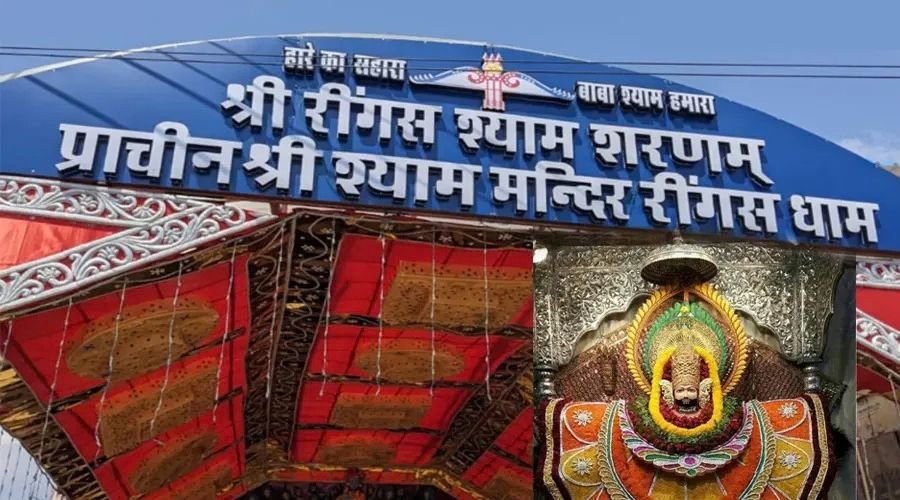
The Khatu Shyam Ji Temple in the Sikar district of Rajasthan draws millions of pilgrims seeking blessings from the deity worshipped as the savior of the defeated. Known originally as Barbarika from the Mahabharata epic, Lord Khatu Shyam holds a central place in modern Hindu worship. Devotees chant “Hare Ka Sahara, Baba Shyam Hamara” which translates to the supporter of the defeated, our Lord Shyam. The year 2026 brings massive changes for these pilgrims. The Indian government has initiated major infrastructure projects including a brand new railway station located just a short distance from the temple grounds. This guide outlines everything required for a seamless visit this year.
Mahabharata: The Legend of Barbarika and the Three Arrows
The presiding deity of the Khatu temple is Barbarika. He was the grandson of Bhima and the son of Ghatotkacha and Maurvi. According to the Skanda Purana, Barbarika displayed exceptional combat skills from a very young age. He learned warfare strategies from his mother and underwent severe penance to please Lord Shiva. Impressed by his immense dedication, Lord Shiva granted Barbarika three infallible arrows. These divine weapons earned him the title of the bearer of three arrows. The power of these three arrows operated on a strict and terrifying targeting system:
- The First Arrow: Marks all the targets Barbarika intends to destroy.
- The Second Arrow: Marks all the targets he wishes to protect.
- The Third Arrow: Seeks out and destroys every target marked by the first arrow before returning safely to his quiver.
This meant Barbarika could end any war in a matter of seconds. As the Mahabharata war approached, he prepared his legendary blue horse to join the battlefield. He had previously made a binding promise to his mother that he would only ever fight for the weaker side.
The Ultimate Sacrifice for Lord Krishna
Lord Krishna understood the catastrophic implications of Barbarika’s vow. Since the Kauravas were destined to lose the war, Barbarika would be forced to join them. His supreme power would then obliterate the Pandavas. To prevent this, Lord Krishna disguised himself as an ordinary Brahmin and approached Barbarika to ask for alms.
Barbarika agreed to give the Brahmin anything he desired. The disguised Lord Krishna immediately asked for Barbarika’s head. Bound by his word and realizing the Brahmin’s true identity, Barbarika agreed without hesitation. His only request was to witness the epic battle of Kurukshetra. Lord Krishna granted this wish by placing Barbarika’s severed head on a high hill overlooking the battlefield.
When the war ended, the Pandava brothers argued about whose efforts secured their victory. Barbarika’s head spoke up and clarified that Lord Krishna’s divine presence and strategy were the sole reasons for their success. Lord Krishna blessed Barbarika with a rare boon. He declared that in the current age of darkness, Barbarika would be worshipped by Krishna’s own name. Lord Krishna promised that anyone who prayed to Khatu Shyam with a pure heart would find their troubles resolved.
Temple Architecture and the Sacred Shyam Kund
Following the events of the Mahabharata, Barbarika’s head was buried in the village of Khatu. Local historical accounts state the head was discovered centuries later when a cow spontaneously released her milk over a specific patch of earth. Digging at this spot revealed the sacred head. The exact location of this discovery was transformed into a holy water body known today as the Shyam Kund.
The initial temple structure was built in 1027 AD by Roop Singh Chauhan, the ruler of Khatu at the time. He reportedly had a dream where Lord Shyam instructed him to unearth the head and build a shrine. In 1720 AD, a nobleman named Abhai Singh undertook a massive renovation and expansion of the complex.
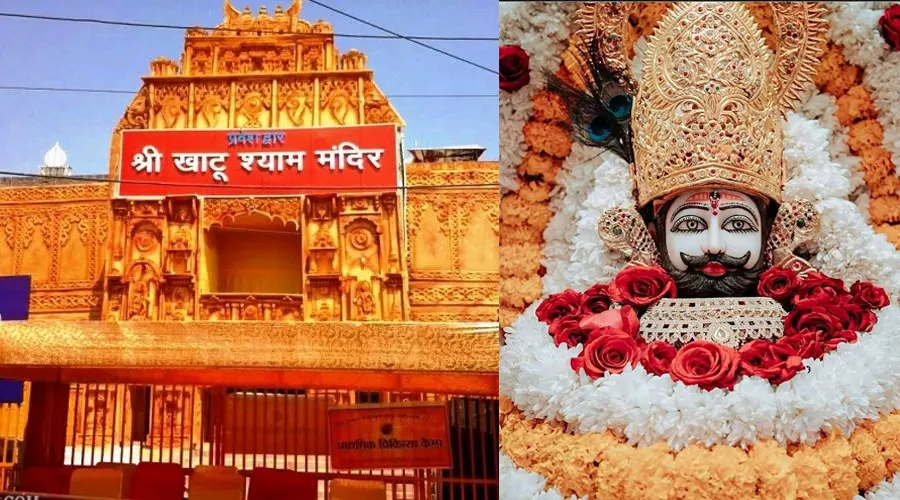
Today, the temple stands as a striking example of traditional Rajputana architecture blended with intricate marble craftsmanship. The main sanctum sanctorum houses the sacred idol, which is crafted from a rare stone. Temple priests decorate the deity daily with elaborate floral arrangements and heavy traditional jewelry. The main entrance doors feature beautiful silver plating embossed with mythological scenes and floral motifs.
The 2026 Sunderpura Railway Station Upgrade
For many years, the primary challenge for pilgrims was the final stretch of the journey. The closest major railway stop was Ringas Junction, located 17 kms away. Visitors had to rely on crowded local transport or walk the remaining distance. The Ministry of Railways has officially launched the Khatu Shyam Ji Sunderpura Railway Station project to solve this bottleneck.
| Infrastructure Feature | Pre 2026 Experience | 2026 Modernization Updates |
| Primary Station | Ringas Junction | Sunderpura Railway Station |
| Distance to Temple | 17 kms | 11 kms |
| Capacity and Facilities | Overcrowded during festivals, basic waiting areas | Handles 35,000 daily passengers, modern sanitary facilities |
| Network Integration | Standard regional stops | Part of a 9 station religious circuit connecting Salasar Balaji |
| Design Elements | Standard commercial design | Rajasthani heritage architecture with a Baba Shyam entrance statue |
Official Darshan Timings & Daily Aarti Schedule
The temple trust operates on a strict timetable to manage the heavy daily crowds. These timings adjust slightly based on the summer and winter seasons. On every Shukla Paksha Ekadashi, the 11th day of the bright half of the lunar month, the temple doors remain open for 24 continuous hours.
| Aarti Name | Summer Timing (Apr to Sep) | Winter Timing (Oct to Mar) | Religious Significance |
| Mangala Aarti | 4:30 AM | 5:30 AM | Conducted when the temple doors first open in the early morning. |
| Shringar Aarti | 7:00 AM | 8:00 AM | Performed after the deity is bathed and decorated with fresh flowers. |
| Bhog Aarti | 12:30 PM | 12:30 PM | Takes place at midday when the Chappan Bhog prasadam is offered. |
| Sandhya Aarti | 7:30 PM | 6:30 PM | The traditional evening prayer performed around sunset. |
| Shayan Aarti | 10:00 PM | 9:00 PM | The final prayer of the night before the temple closes for sleep. |
The Phalguna Mela and the 17 Kilometer Nishan Yatra
The temple experiences its highest footfall during the annual Phalguna Mela. This grand festival occurs in February or March, corresponding to the Hindu month of Phalguna. The celebrations peak on the Ekadashi and Dwadashi days of the Shukla Paksha.
The highlight of this festival is the Nishan Yatra. Devotees carry a Nishan, a large triangular flag usually saffron or yellow, bearing the symbols of Lord Khatu Shyam. Millions of pilgrims gather at Ringas and walk barefoot for 17 kms to the temple in Khatu. They carry these heavy flags while singing bhajans and chanting prayers. Local residents and charitable trusts set up thousands of free food and medical camps along the route to support the walking pilgrims.
Complete Guide to Local Food & Accommodation
Planning where to stay and what to eat is vital for a comfortable pilgrimage. Khatu town has evolved significantly to cater to the massive influx of tourists.
- Official Dharamshalas: The Shri Shyam Mandir Committee operates several large Dharamshalas. These provide highly subsidized, clean, and safe rooms. Booking these rooms requires early planning, especially during the winter months, as they fill up weeks in advance.
- Private Guesthouses: Hundreds of private hotels and budget guesthouses line the streets approaching the temple. Prices range from basic budget rooms to premium air conditioned suites.
- The Famous Khatu Peda: No trip is complete without tasting the local Khatu Peda. Made from thickened milk and sugar, this sweet is the primary offering made to Lord Shyam. Hundreds of sweet shops outside the temple prepare it fresh daily.
- Bhandara Culture: During festival seasons and weekends, charitable trusts run free kitchens called bhandaras. They serve fresh, hot vegetarian meals to all visitors regardless of their background.
Transportation Options: How to Reach Khatu Shyam ji
Reaching the temple town is straightforward due to well maintained regional infrastructure.
- By Air: Jaipur International Airport is the closest aviation hub, located about 80 kms from Khatu. Visitors can book prepaid taxis or use state transport buses directly from the airport to the temple town.
- By Train: While Sunderpura is actively developing, Ringas Junction remains fully operational. Shared jeeps, auto rickshaws, and buses are available outside the station round the clock.
- By Road: Khatu connects seamlessly to major highways. It takes about two hours to drive from Jaipur via NH 52. The drive from Delhi takes approximately five to six hours. Both private Volvo operators and state transport buses run direct daily services from Delhi and Jaipur to Khatu.
Practical Guidelines for a Seamless Visit
A well planned trip ensures a much better spiritual experience.
- Timing Your Visit: Avoid Sundays, Ekadashi days, and public holidays if you prefer a quiet darshan. Early mornings on regular weekdays offer the most peaceful environment.
- Temple Dress Code: The temple committee requires all visitors to wear modest traditional clothing. Shorts, sleeveless shirts, and revealing outfits are not permitted inside the complex.
- Security and Electronics: Cameras and mobile phones cannot be taken into the main sanctum. Visitors must use the official locker facilities outside the temple to store their electronic devices before joining the queue.
- VIP Darshan Awareness: The temple management strictly prohibits paid VIP darshan lines to ensure equality among all devotees. Everyone must join the standard queues.
Commonly asked questions
Why is Khatu Shyam Ji known as Hare ka Sahara?
Barbarika vowed to his mother that he would only fight for the losing side in any battle. Because of this promise, he became known as the ultimate supporter of those who are defeated or struggling in life.
How long does it take to complete the darshan?
On a standard weekday, the queue takes about 30 to 45 minutes. During weekends, Ekadashi, or the Phalguna Mela, waiting times easily stretch from three to eight hours.
What is the religious importance of the Shyam Kund?
The Shyam Kund is the exact location where Barbarika’s head was found buried in the earth. Pilgrims believe bathing in this sacred pond helps cure physical ailments and washes away past sins.
Can visitors sponsor the midday food offering?
Yes, devotees can sponsor the Chappan Bhog feast. This requires prior registration and coordination directly with the temple priests or the official administrative committee.
References
- Shri Shyam Mandir Committee Official Website: Official Guidelines, Historical Archives, and Current Darshan Timings.
- Ministry of Railways Government of India: Sunderpura Station Project Announcements and North Western Railway Updates.
- Rajasthan Tourism Department: Cultural Festivals Directory and Phalguna Mela Documentation.
- Wisdom Library: Skanda Purana: English translations of ancient Hindu texts detailing the lore of Barbarika and the origins of the three arrows.