

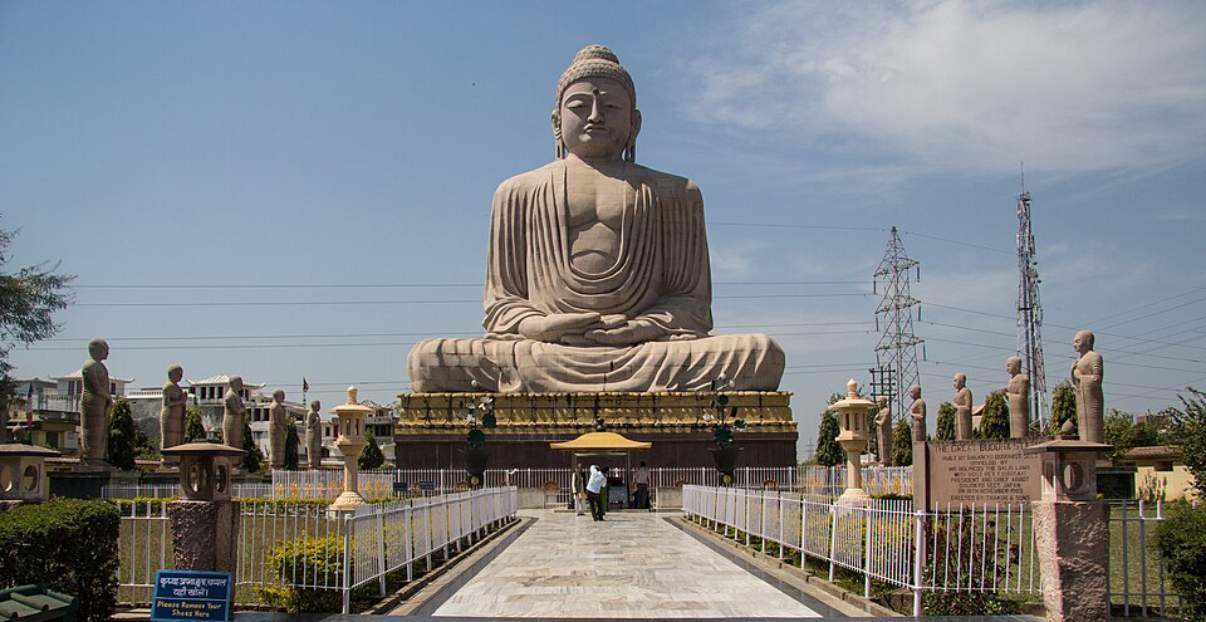
There is a calm feeling that settles over Bodh Gaya early in the morning. Long before the sun comes up over the hills of Bihar, the air is cool and carries the soft smell of incense, flowers, and the nearby river. Bodh Gaya is not a place you should rush through. It is an ancient town where Prince Siddhartha sat beneath a banyan tree and became the Buddha. Today, it is a peaceful pilgrimage site where monks from all over the world live alongside local Indian village life.
Mahabodhi Temple: Timings, Passes & Important Rules
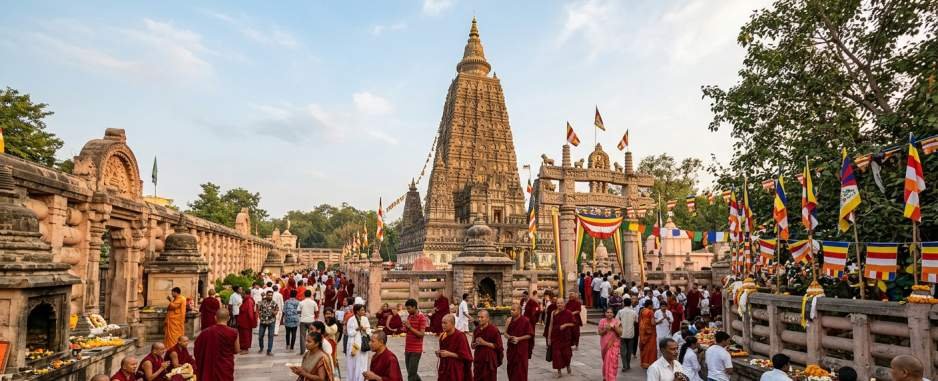
The Mahabodhi Temple is the main heart of Bodh Gaya. It is a large stone temple that stands over 180 feet high, surrounded by quiet gardens and walking paths.
Daily Timings and Prayers
- 05:00 AM: Main gates open to the public
- 05:30 AM – 06:30 AM: Morning prayers and chanting by monks
- 10:00 AM: Morning food offering
- 06:00 PM – 07:15 PM: Evening prayer and lighting of oil lamps
- 09:00 PM: Temple gates close for the night
Security Rules, Camera Fees, and Entry
- Entry Fee: Free entry for all domestic and international visitors.
- Special Passes: No advance entry pass is needed for individuals. Group meditation or chanting sessions can request permission at the management office near the main gate.
- Mobile Phones: Phones, smartwatches, and electronic gadgets are strictly prohibited inside the temple premises. You must deposit them in the free lockers near the entrance gate.
- Camera Ticket Fees: Still Camera / DSLR costs Rs.200 – Rs.300 per camera; a video camera requires a separate commercial permit at the counter.
- Dress Code: Wear simple, respectful clothing that covers your shoulders and knees.
- Shoes Policy: Shoes are not allowed inside. You can leave them safely at the free shoe counter outside. During winter mornings, wearing thick socks helps protect your feet from cold marble floors.
The Bodhi Tree and Key Sacred Spots Inside
Directly behind the main temple stands the sacred Bodhi Tree. This tree grows on the exact spot where Buddha sat during his meditation.
Inside the main complex, make sure to visit these key sacred spots:
- Vajrasana (The Diamond Throne): A polished red sandstone slab installed under the Bodhi Tree by Emperor Ashoka to mark the exact spot of enlightenment.
- Animesh Lochan Chaitya: A small shrine marking the spot where Buddha stood for seven unblinking days looking at the Bodhi Tree in gratitude.
- Cankamana (Jewel Walkway): A raised stone platform carved with lotus flowers marking where Buddha walked in deep meditation during his second week after enlightenment.
- Muchalinda Lake: A quiet pond featuring a statue of Buddha sheltered by the hood of a giant cobra king during a storm.
Visiting Hours for International Monasteries
Bodh Gaya has many beautiful temples built by different countries. Each monastery shows the traditional building style and culture of its home nation.
Note: Most international monasteries close between 12:00 PM and 02:00 PM in the afternoon.
Places to Visit Nearby
- Sujata Stupa: Located 3 kms across the river in Bakror village. It marks the place where a village woman named Sujata offered rice-kheer to Buddha.
- Dungeshwari Caves: Located 12 kms away in the hills. Buddha stayed in these rocky caves for six years before coming to Bodh Gaya.
- ASI Archaeological Museum: Located near the main temple, housing ancient stone sculptures, terracotta objects, and historic railings excavated from the site.
Major Festivals & Cultural Events
- Buddha Jayanti (May): The biggest festival in Bodh Gaya celebrating Buddha’s birth, enlightenment, and passing. The town hosts grand colorful processions, special prayers, and public sermons.
- Kagyu & Nyingma Monlam Festivals (December – January): Annual international prayer gatherings where thousands of monks gather under the Bodhi Tree for world peace.
- Kalachakra Teachings: Held periodically when spiritual leaders deliver teachings, attracting visitors from across the globe.
Shopping & Local Souvenirs
- Tibetan Refugee Market: Open during the winter season, offering warm woolens, shawls, and Tibetan handicrafts.
- Spiritual Items: Brass singing bowls, small prayer wheels, incense sticks, and carved wooden or stone Buddha statues.
- Bodhi Leaf Keepsakes: Hand-painted leaves from the sacred tree family sold as framed souvenirs.
Suggested 2-Day Tour Plan
Day 1:
- Morning (05:30 AM – 09:00 AM): Visit Mahabodhi Temple for morning chanting, see the Bodhi Tree, and explore the inner shrines.
- Late Morning (09:30 AM – 12:00 PM): Visit the 80-Foot Great Buddha Statue, Thai Monastery, and Japanese Temple.
- Afternoon (02:00 PM – 05:00 PM): Explore the Royal Bhutan Monastery, Tergar Tibetan Monastery, and ASI Museum.
- Evening (06:00 PM – 08:00 PM): Return to Mahabodhi Temple to see thousands of oil lamps lit up for evening prayers.
Day 2:
- Morning (07:00 AM – 10:30 AM): Take an e-rickshaw across the river to visit Sujata Stupa and Sujata Village.
- Late Morning (11:00 AM – 02:00 PM): Visit the Dungeshwari Cave Temples in the nearby hills.
- Evening: Shop for local handicrafts, prayer bowls, and souvenirs in the local market near the main temple road.
Estimated Travel Budget & Stay Options
Bodh Gaya offers accommodations for every type of traveler:
Food Tip: Local eateries serve simple Bihari meals (Litti Chokha), Tibetan dishes (Momo, Thukpa), and popular international breakfasts for foreign visitors.
Safety, Health & Important Advice
- Drinking Water: Stick to sealed bottled water or purified water stations.
- Buying Relics: Avoid buying items claiming to be “real Bodhi tree wood” or ancient artifacts from street hawkers.
- Winter Fog: Dense fog is common during December and January, so allow extra time for road travel and train schedules.
Emergency Contacts & Helplines
- Tourist Police Station (Bodh Gaya): +91 631 2200418 / 112
- Mahabodhi Temple Management Committee (BTMC): +91 631 2200735
- ANMMCH Hospital (Gaya): +91 631 2220120
Local Tips for Visitors
- Best Time to Travel: Visit between October & March when the weather is cool and pleasant (19°C to 24°C). Summers (April to June) are very hot, going above 42°C.
- Local Transport: Green battery rickshaws (e-rickshaws) are easy to find and are the best way to travel between different monasteries.
How to Reach
- By Plane: Gaya Airport is 12 km away, with domestic flights and direct winter charters from Southeast Asia.
- By Train: Gaya Junction railway station is 16 km away, with direct trains from major Indian cities like Delhi, Kolkata, Varanasi, and Patna.
Take It Slow and do not try to see everything in a hurry. Sit quietly in the temple gardens in the evening when hundreds of small lamps are lit up around the temple.
FAQs
Is there an entry ticket required for the Mahabodhi Temple?
No, entry to the Mahabodhi Temple complex is completely free for all domestic and international visitors. However, if you carry a DSLR or video camera, you must buy a camera pass at the counter.
Are mobile phones allowed inside the Mahabodhi Temple?
No, mobile phones, smartwatches, and all electronic devices are strictly banned inside the main temple complex. You must store them in the free lockers provided near the security entrance.
How far is Bodh Gaya from Gaya Junction Railway Station?
Bodh Gaya is about 16 kms away from Gaya Junction. You can easily hire an auto-rickshaw, e-rickshaw, or taxi from outside the station to reach Bodh Gaya in about 30 to 40 minutes.
Do international monasteries charge an entry fee?
No, almost all international monasteries in Bodh Gaya, including the Thai, Japanese, and Bhutanese temples, are free to enter.