
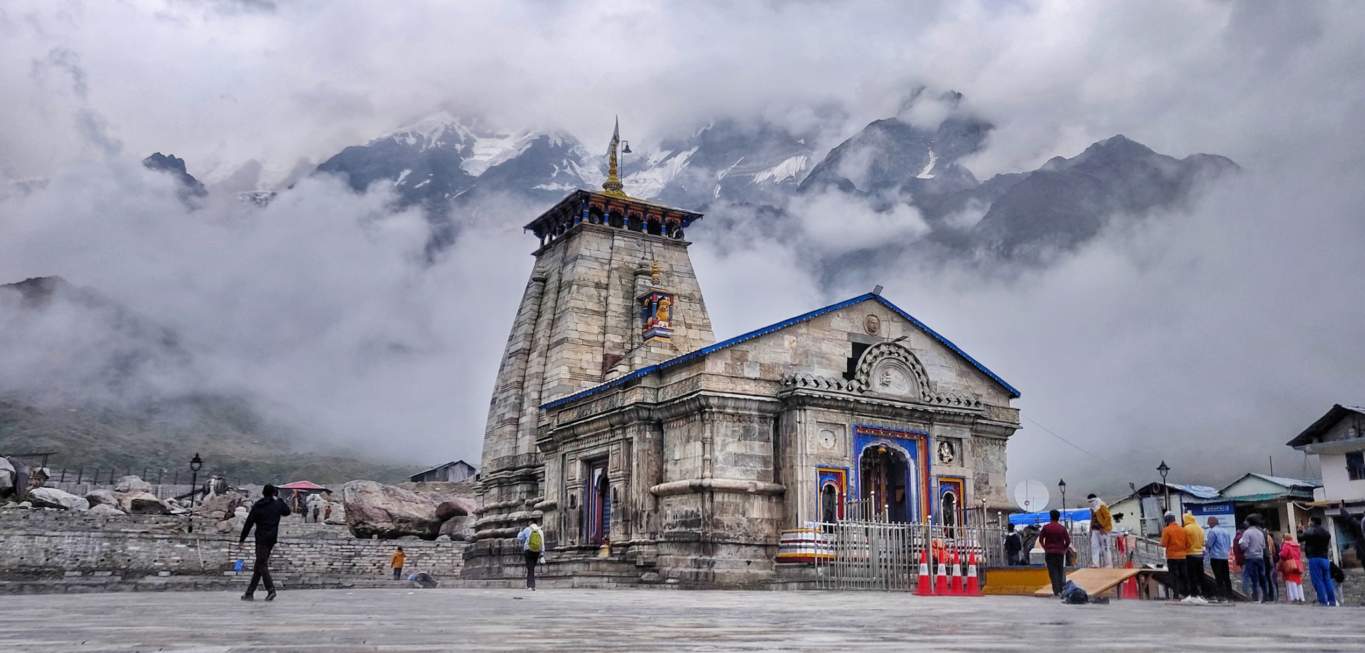
High up at 3,583 meters in the Rudraprayag district of Uttarakhand, Kedarnath Temple stands as one of the most sacred places in India. Set against the towering peaks of the Garhwal Himalayas with the Mandakini River running past, this ancient stone shrine is the highest of the 12 Jyotirlingas and the central pillar of the Char Dham pilgrimage.
The Pandava Legend and the Sacred Panch Kedar
The history of Kedarnath traces back to epic traditions that mark this high valley of Kedar Khand as a land of deep spiritual penance.
- The Quest of the Pandavas: After the Mahabharata war, the Pandavas traveled to the mountains seeking Lord Shiva to cleanse the sin of fratricide. Lord Shiva took the form of a celestial bull and hid among grazing herds. When Bhima recognized him, the bull sank into the earth, leaving its hump behind. Moved by their sincerity, Shiva absolved the brothers and appeared as a triangular pillar of light.
- The Panch Kedar Network: Other parts of the divine bull appeared across four nearby sites: Kedarnath (the hump), Tungnath (the arms), Rudranath (the face), Madhyamaheshwar (the navel), and Kalpeshwar (matted hair).
- Meaning of Kedar: The name comes from Kedara (field) and Natha (lord), meaning Lord of the Sacred Field.
- The Nar and Narayana Tapasya: According to the Shiva Purana, the twin sages Nar and Narayana performed severe penance in this valley. Pleased by their devotion, Lord Shiva agreed to reside here permanently in the form of a self-manifested Jyotirlinga.
Ancient Stone Engineering & Natural Miracles
Restored by Adi Shankaracharya in the 8th century CE, the temple is a remarkable piece of ancient engineering built to survive harsh mountain weather.
Geological studies show that during the Little Ice Age between the 14th and 18th centuries, the temple stayed buried under snow for nearly 400 years without structural damage. During the 2013 flash floods, a massive boulder now called Bhim Shila rolled down and stopped right behind the shrine, splitting the floodwaters around the main building and saving it.
Daily Kedarnath Temple Timings & Holy Sites Nearby
- Morning Darshan (4:00 AM to 3:00 PM): Starts with Maha Abhishek Puja at 4:00 AM, where priests bathe the Lingam with ghee, milk, and honey. Doors open afterward for public prayers and simple offerings.
- Evening Darshan and Aarti (5:00 PM to 9:00 PM): The priest decorates the shrine with fresh flowers and sandalwood paste for the 6:30 PM Aarti. Doors close at 9:00 PM.
- Bhairavnath Temple: Located 500 meters uphill from the main complex, this open-air temple is dedicated to Lord Bhairav, the guardian deity who protects the valley during the winter months.
- Gandhi Sarovar: A glacial lake located 3 km from the shrine at the base of Kedar Dome, where Lord Shiva is believed to have taught the basics of Yoga to the Saptarishis.
- Vasu Ki Tal: A serene high-altitude lake 8 km from the temple, sitting at 4,135 meters above sea level and famous for rare high-mountain flora.
- Rethas Kund: A small water spring near the temple premises known for producing bubbles when holy chants are recited nearby.
Cameras and phone photography are strictly prohibited inside the inner hall.
Kedarnath Weather Windows, Staying Options & Local Food
- When to Travel: May to June and September to October offer the safest conditions. The monsoon months of July and August bring heavy rain and landslide risks.
- Where to Stay: Book early through Garhwal Mandal Vikas Nigam for government rest houses and tents at Sonprayag, Gaurikund, or Kedarnath.
- Food Rules: The entire route from Devprayag upward is a strict vegetarian and alcohol-free zone. Small stalls along the path serve hot tea, water, and basic cooked meals.
Official 2026 Registration, Route and Trek Rules
Every traveler must obtain a free registration pass before passing security posts.
Route and Trek Essentials
- Drive Route: Haridwar/Rishikesh to Devprayag to Srinagar to Rudraprayag to Guptkashi to Sonprayag.
- Trek Timings: Vehicles stop at Sonprayag, where local taxis run the 6 km stretch to Gaurikund. The 16 to 18 km walking path opens at 4:00 AM and closes at 1:30 PM.
- Helicopter Bookings: Flights from Phata, Sirsi, and Guptkashi are booked exclusively on the official IRCTC portal.
- Altitude Advice: Medical posts operate at Sonprayag and Gaurikund. Resting a night at Guptkashi helps your body adapt to high altitude.
2026 Season Dates & New Infrastructure Updates
- Current Season Dates: The temple opened on April 22, 2026, and closes on November 11, 2026 for Bhai Dooj. Winter worship moves to Omkareshwar Temple in Ukhimath.
- Flight Rules: Helicopters operate with two-pilot crews, GPS tracking, and a 5 kg luggage limit per person. Flights pause during heavy rain.
- Upcoming Ropeway: Work continues on a 12.9 km ropeway from Sonprayag to Kedarnath under the Parvatmala Pariyojana. Once complete, it will turn the long mountain hike into a 36-minute cable car ride.
Essential Packing Checklist for High Altitude like Kedarnath
Because temperatures at 3,583 meters drop rapidly after sunset, preparing the right gear is critical for health and comfort.
- Layered Clothing: Thermal inner wear, a fleece jacket, a windproof outer coat, and a light raincoat or poncho for sudden downpours.
- Footwear: Sturdy waterproof trekking shoes with strong ankle support and multiple pairs of thick woolen socks.
- Health Essentials: Personal prescription medicines, altitude sickness tablets, a basic first-aid kit, and portable oxygen cans for high-altitude trekking.
- Accessories: Thermal gloves, a woolen cap, UV protection sunglasses, sunscreen, and a high-capacity power bank, as cold weather drains electronic batteries quickly.
FAQ’s
How much does the Kedarnath trip cost?
A basic walking trip costs Rs. 3,000 to 6,000. Ponies or palanquins add Rs. 3,000 to 10,000, while round-trip helicopter tickets cost Rs. 5,500 to 8,500.
Can I register offline?
Yes, offline counters operate at Haridwar, Rishikesh, Sonprayag, and Guptkashi, but daily tokens are limited during peak season.
What help is available for seniors?
Elderly pilgrims can book official helicopter flights, government-regulated ponies, or palanquins carried by registered porters from Gaurikund.
Which SIM card works best up there?
Jio and BSNL offer the most reliable network coverage along the trek route and around the temple premises.
Official Travel Resources
Disclaimer: This guide is provided for general informational purposes to help pilgrims plan their journey. Government rules, Yatra registration dates, helicopter fares, and local weather conditions can change without prior notice. Visitors are advised to verify official guidelines and real-time updates through official state channels before traveling.