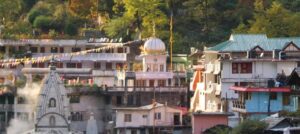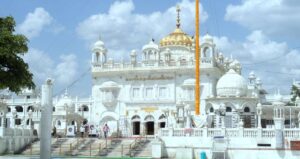

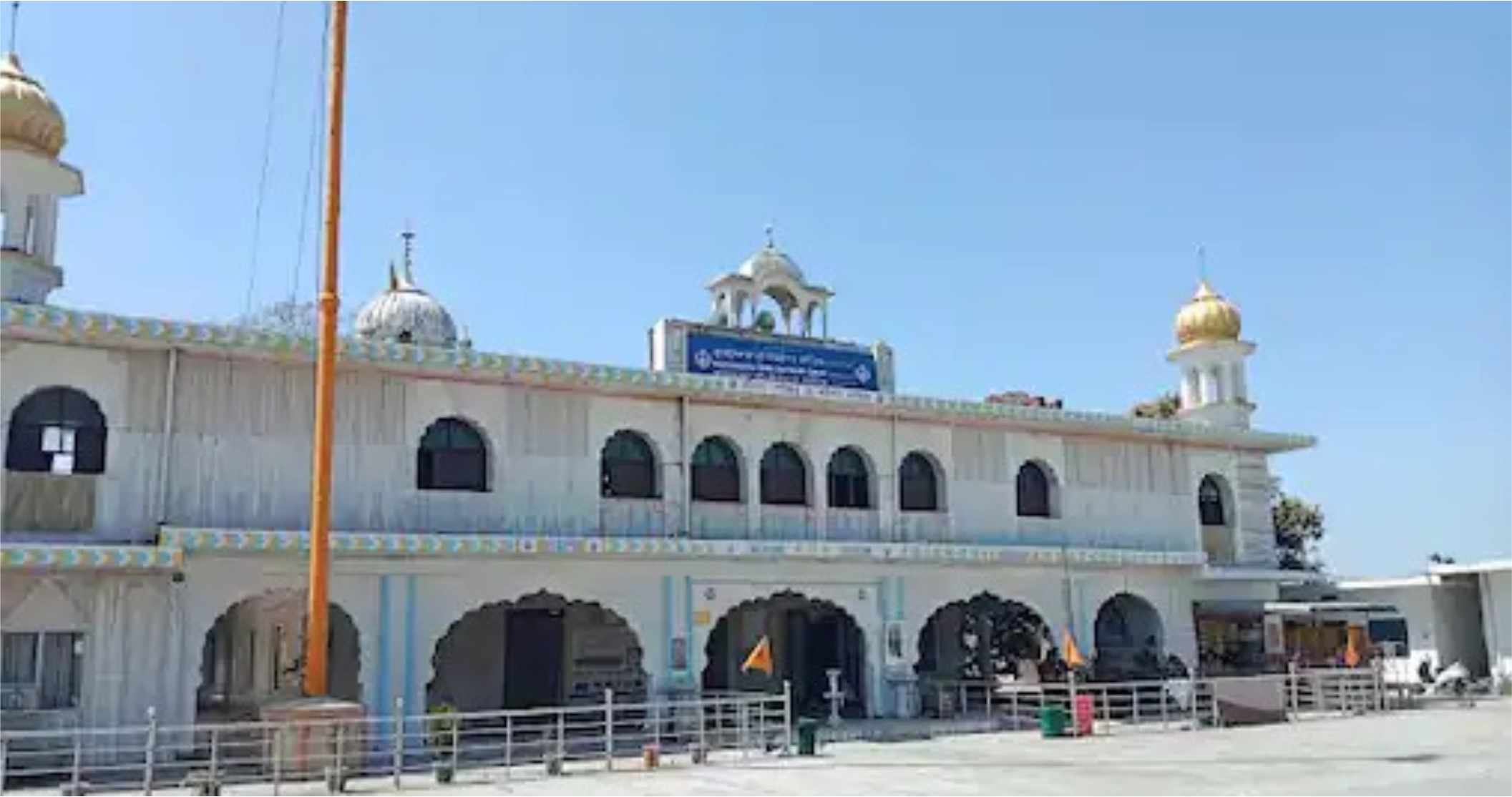
Gurdwara Paonta Sahib, Himachal Pradesh, is closely associated with the three years Guru Gobind Singh spent at Paonta during the late seventeenth century. The present shrine preserves memories from that period through its historic spaces, museum, literary traditions and objects associated with the tenth Sikh Guru. The Sirmaur district administration currently lists the Gurdwara’s last update as August 12, 2026, confirming its location on the Yamuna and its principal historical features.
Paonta is worth approaching differently from a conventional pilgrimage stop. Its importance is not based on one relic or one famous incident. Guru Gobind Singh’s extended residence brought together poetry, writing, administration and warfare, and several small places inside the Gurdwara complex still preserve traces of that unusually active period.
The three years that shaped Paonta Sahib
The connection between Paonta and Guru Gobind Singh was long enough to leave a substantial historical imprint. The official history of Sirmaur records that the Guru resided at Paonta for three years, during the reign of Raja Mat Parkash, before the events that eventually led to the Battle of Bhangani.
That length of residence changes the way the site should be understood. Paonta was not simply a place where the Guru stopped while travelling through the hills. It became a base from which a court developed around him, literary activity flourished and military events eventually unfolded in the surrounding region.
Paonta was also a place of poetry
The literary side of Guru Gobind Singh’s time at Paonta is one of the site’s less obvious attractions. The official Paonta Sahib account identifies Kavi Darbar as a place associated with poetry competitions and records the tradition that the Dasam Granth was written here.
Kavi Darbar matters because it gives the visitor a glimpse of the intellectual environment surrounding the Guru. Paonta was not remembered solely for religious observance or military preparation; poetry and literary exchange formed part of the life of the court. That makes the town particularly relevant to anyone interested in the literary history of Sikhism.
The Yamuna explains part of Paonta’s character
The Yamuna runs beside Paonta Sahib, and the river remains an important part of the setting around the Gurdwara. The Sirmaur administration records several local explanations for the name Paonta, including traditions connecting it with Guru Gobind Singh’s foot and another account involving an ornament associated with the Yamuna.
The presence of competing explanations is itself interesting. Rather than forcing the town’s name into one definitive story, the local record preserves different traditions that developed around the same place. The river consequently appears not merely as scenery but as part of the cultural memory of Paonta.
Four smaller places reveal more than the main shrine
The main Gurdwara is naturally the centre of a visit, but some of the most specific historical details are found in the smaller spaces around it. The district administration identifies Shri Talab Asthan, Shri Dastar Asthan and Kavi Darbar, while the museum contains weapons and pens associated with Guru Gobind Singh.
| Place | Connection |
|---|---|
| Shri Talab Asthan | Salary distribution |
| Shri Dastar Asthan | Turban competitions |
| Kavi Darbar | Poetry |
| Museum | Pens and weapons |
Shri Talab Asthan is traditionally associated with the distribution of salaries, while Shri Dastar Asthan is linked with turban-tying competitions. These details give Paonta a more personal and administrative dimension: they tell us something about how the Guru’s court functioned, rather than only describing the religious importance of the shrine.
The museum preserves an unusual combination
The museum’s pens and weapons are particularly revealing because they represent two very different sides of Guru Gobind Singh’s life at Paonta. The pens correspond naturally with the literary reputation of his court, while the weapons recall the increasingly difficult political and military circumstances of the period.
Seeing those two categories together helps explain why Paonta cannot easily be reduced to either a literary centre or a military landmark. The same period produced both intellectual activity and armed conflict, and the material preserved at the Gurdwara reflects that contrast.
Bhangani changed the story of Paonta
The peaceful Yamuna setting can hide the military importance of the area. The official Sirmaur history records that Guru Gobind Singh later fought a battle at Paonta against the forces of the hill rulers of Bilaspur and Srinagar, with the Guru emerging victorious.
The Battle of Bhangani therefore belongs naturally in the story of Paonta Sahib. A separate Gurdwara at Bhangani commemorates the battle, allowing visitors who want to explore this episode further to connect the place where Guru Gobind Singh lived with the nearby landscape where the conflict took place.
For readers researching famous Gurdwaras in India, this connection gives Paonta an unusual depth: the same pilgrimage area preserves literary, administrative and military memories from the Guru’s life.
A golden Palki and other living traditions
The Gurdwara also contains a pure-gold Palki donated by devotees, a detail recorded by the Sirmaur administration. The complex remains an active place of worship rather than functioning only as a historical site, and langar continues to be served to visitors.
That distinction is important when visiting Paonta. The historic objects and rooms belong to the site’s past, but the prayer services, langar and daily presence of pilgrims belong to its present. The two exist together rather than being separated into a museum experience and a religious experience.
Paonta’s Yamuna-side location affects the journey
Paonta Sahib is considerably easier to reach than the high-altitude Gurdwaras of Himachal Pradesh. The current Sirmaur district information places the town about 45 kilometres from Dehradun and gives Dehradun as the nearest railhead. Jolly Grant Airport is listed about 61 kilometres away, while Chandigarh is about 180 kilometres by road.
| Starting point | Approx. distance |
|---|---|
| Dehradun | 45 km |
| Nahan | 45 km |
| Chandigarh | 180 km |
| Jolly Grant Airport | 61 km |
These are useful planning distances rather than guaranteed journey times. Paonta’s position close to Uttarakhand also means that approaching from Dehradun can make more sense for many travellers than routing the entire journey through the interior of Himachal Pradesh.
The climate is very different from high Himalayan shrines
Paonta’s elevation is only about 397.7 metres, according to the Sirmaur district administration, so the town does not face the winter closure issues associated with high Himalayan pilgrimage destinations. The lower elevation also means summer heat becomes a more important consideration when planning time outdoors.
For someone planning a visit around the Gurdwara’s historical spaces, the cooler part of the year is generally more comfortable. Visitors travelling during the warmer months can still make the pilgrimage, but it is sensible to avoid assuming that Paonta’s mountain setting automatically means cool weather.
Why Paonta deserves a place on a Sikh heritage journey
Paonta Sahib offers an unusually concentrated view of Guru Gobind Singh’s life. His three-year residence is remembered through the literary traditions of Kavi Darbar, the administrative memories attached to Shri Talab Asthan, the turban tradition of Shri Dastar Asthan, the preserved pens and weapons, and the military history of Bhangani.
The Yamuna provides the setting that holds these memories together. Instead of encountering isolated facts about Guru Gobind Singh, visitors can walk through a place where several aspects of his life developed during the same period. That is what gives Paonta Sahib its own character among India’s historic Sikh pilgrimage sites.
FAQ’s
Why is Gurdwara Paonta Sahib famous?
It is associated with Guru Gobind Singh’s three-year residence, his literary court, the traditions of Kavi Darbar and the military history connected with the Battle of Bhangani.
Where is Gurdwara Paonta Sahib located?
The Gurdwara is in Paonta Sahib, Sirmaur district, Himachal Pradesh, on the bank of the Yamuna.
What is Kavi Darbar at Paonta Sahib?
Kavi Darbar is associated with the poetry and literary activity that developed around Guru Gobind Singh’s court during his residence at Paonta.
How far is Paonta Sahib from Dehradun?
The current Sirmaur district administration lists Paonta Sahib approximately 45 kilometres from Dehradun.
What historic objects are preserved at Paonta Sahib?
The Gurdwara complex has a museum displaying weapons and pens associated with Guru Gobind Singh, alongside other historic places within the shrine.