
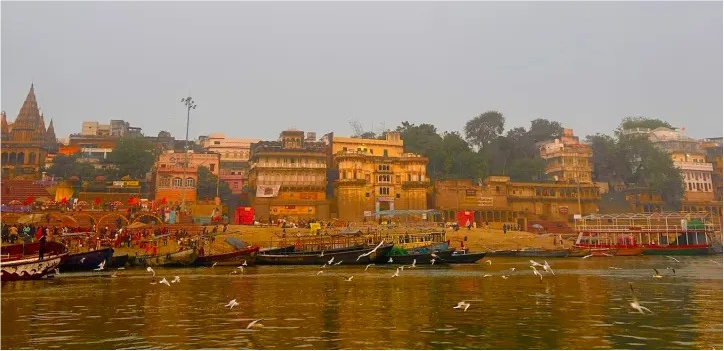
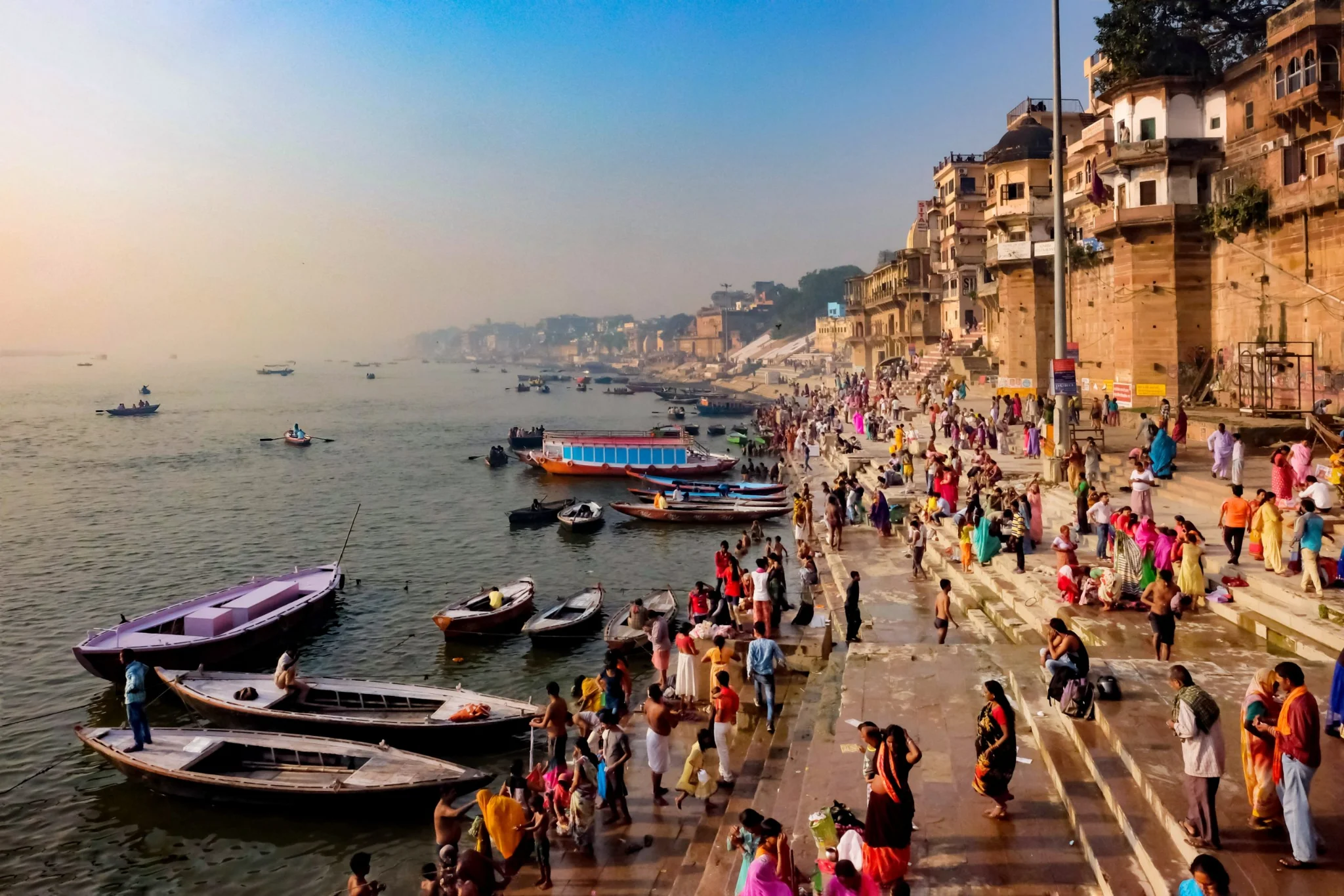
Varanasi ghats form the spiritual core of Kashi, spanning over 84 historic stone step platforms along the crescent bank of the sacred Ganga. City planners balance centuries-old daily ritual routines with civil infrastructure upgrades across these steps, ensuring that the ancient riverfront functions as a clean, accessible, and sustainable cultural corridor for visitors and pilgrims.
Key Ghats and Their Religious Significance
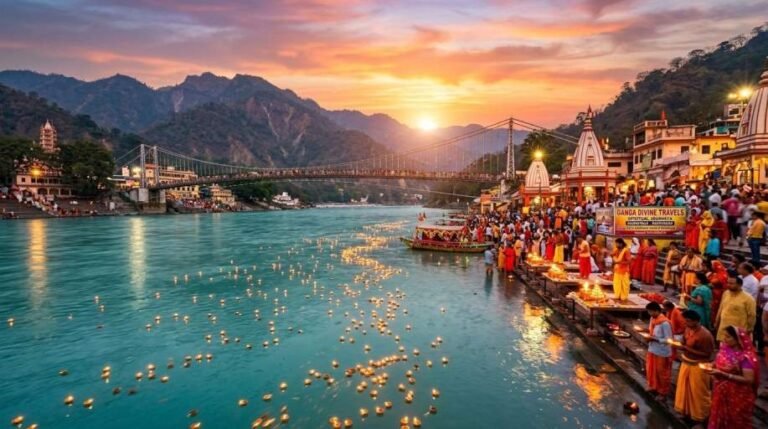
- Dashashwamedh Ghat: Positioned at the heart of the riverfront, this remains the most active public gathering space. It hosts the daily evening Ganga Aarti, using structured pontoon-based crowd channels and low-impact lighting to handle high foot traffic safely.
- Namo Ghat: Serving as the modern northern gateway, Namo Ghat integrates contemporary transit facilities with riverfront design. It features helipads, CNG vessel charging docks, open amphitheatres, and direct highway connections.
- Assi Ghat: Located at the southern end where the Assi River meets the Ganga, this ghat is known for the daily Subah-e-Banaras morning program, which brings together morning ragas, Vedic chanting, yoga sessions, and classical music performances.
- Manikarnika and Harishchandra Ghats: Operating as sacred cremation grounds for continuous funeral rites, these sites feature active modernization projects including improved wood-storage spaces, elevated spectator areas, and smoke-filtration equipment.
- Chet Singh Ghat: Defined by its massive 18th-century stone fortress walls, this historical landmark displays the political and military past of the region while providing a quiet location for heritage photography and architectural research.
- Panchganga Ghat: Regarded as the convergence site of five sacred underground streams, this elevated platform holds historic shrines and offers wide views across the river bend.
- Scindia Ghat: Recognized for its partially submerged Shiva temple, this site demonstrates the physical shifts of the riverbed while offering a space for quiet reflection away from commercial crowds.
- Darhanga & Brijrama Ghats: Distinguished by 19th-century palaces built from Chunar sandstone, these adjacent platforms highlight how royal structures were converted into heritage accommodation along the water.
Varanasi Ghat Amenities and Best Visiting Times
Tourist Travel Logistics & Aarti Timings
Digital Tech & Transportation Infrastructure
- 1:500 High-Precision Spatial Digital Twin: The Varanasi Smart City initiative works with Genesys International to run a city-wide 3D Spatial Digital Twin mapping a 160 sq. km area. Built using aerial LiDAR, mobile scanners, and 360-degree street photography, this 1:500 scale model allows municipal teams to monitor stone step erosion, model seasonal flood levels, and track crowd patterns.
- KICCC Command Integration: Direct feeds from thermal monitoring cameras, water-skimming records, and water quality sensors funnel into the Kashi Integrated Command and Control Centre (KICCC). This system manages real-time emergency dispatches, rescue boats, and foot traffic controls around crowded steps.
- 46 km Greenfield Ganga Elevated Corridor: Approved by the Union Cabinet under the Hybrid Annuity Model (HAM), this 6-lane elevated express highway connects NH-19 to the Varanasi Ring Road (NH-135B). The route features a 910-meter cable-stayed bridge over the river Ganga, a 1.32 km extradosed Foot Over Bridge equipped with travelators for direct walking access to Kashi Vishwanath Temple, and a direct spur connecting Banaras Hindu University (BHU) to Samne Ghat to bypass inner city choke points.
- Floating Public Amenities Platforms: Modular floating jetties anchored at key sites provide enclosed changing rooms, boat mooring berths, and filtered drinking water stations directly along the water.
River Cleanliness and Environmental Initiatives
- Clean Ganga & River Transport: Traditional motorboats continue converting to CNG and solar power, cutting down motor noise, oil spills, and emissions across the river corridor.
- Waste Management and Sewage Diversion: Interceptor pipelines redirect urban runoff away from the stone steps, while municipal water-skimming vessels clear floating debris daily.
- Paved Heritage Walkways: Continuous stone walkways link the northern and southern sectors, letting pilgrims walk the full riverfront length without cutting through congested city streets.
- Crowd Flow & Safety Infrastructure: Central monitoring rooms track foot traffic using smart cameras, automated public address loudspeakers, and stationed river rescue personnel.
-
Green Energy Integration: Solar arrays installed on public roof spaces along the upper ridges generate continuous power for streetlights, information screens, and security setups.
Varanasi Ghats | Visitor Guidelines and Local Etiquette
- Respecting Sacred Rituals: When attending ceremonies or passing through cremation grounds like Manikarnika, visitors should dress modestly, keep noise levels low, and refrain from taking photos of funeral pyres or grieving families.
- Navigating Boat Tours: Early morning boat trips give the clearest view of morning prayers along the steps. Booking through licensed municipal stalls guarantees fixed rates and working life jackets.
- Exploring the Inner Lanes: The narrow lanes behind the riverfront steps hold historic shrines, traditional silk weaving units, and long-standing food stalls that add to the waterfront visit.
- Seasonal Planning: High water during the post-monsoon months can temporarily cover lower steps and restrict boat movement, while winter brings mild temperatures for walking between the ghats.
Structural Maintenance and Stone Restoration
Maintaining the structural stability of old stone masonry demands ongoing restoration work. Engineering crews use non-destructive testing tools to inspect submerged foundation piers, repairing damaged sections with matching Chunar sandstone blocks and lime mortar. By combining structural repairs with environmental rules, municipal authorities keep the Varanasi ghats running as both an active spiritual site and an accessible cultural destination.